The short answer: Amazon is where most growers buy LED grow lights today, and for good reason. The selection is massive, returns are straightforward, and you can filter by real specs rather than relying on a store associate who may know nothing about PPFD. But Amazon isn't always the best choice, and depending on your situation, a specialty grow shop, a direct brand purchase, or even a local hardware store might serve you better. Here's how to figure out where to buy, what to look for, and how to avoid the traps that cost growers real money.
Where to Buy LED Grow Lights: Best Places and How to Choose
Marcus Rutherford
24 Mar 2026
Best places to buy LED grow lights (online vs local)
Most growers today buy online, and the options break down into a few clear categories. Each has real trade-offs worth knowing before you start clicking.
Amazon
Amazon is the default starting point for most people, and it earns that position. You'll find nearly every major brand, from Spider Farmer and Mars Hydro to ViparSpectra and Gavita, often at competitive prices. The filtering tools let you sort by wattage, coverage area, and customer ratings, which helps narrow things fast. The catch is that Amazon mixes first-party sellers with third-party marketplace sellers, and the return experience varies depending on who you bought from. Items sold and shipped directly by Amazon typically fall under a standard 30-day return window, but marketplace sellers set their own policies. Always check the seller name and return terms before buying.
Direct from the brand
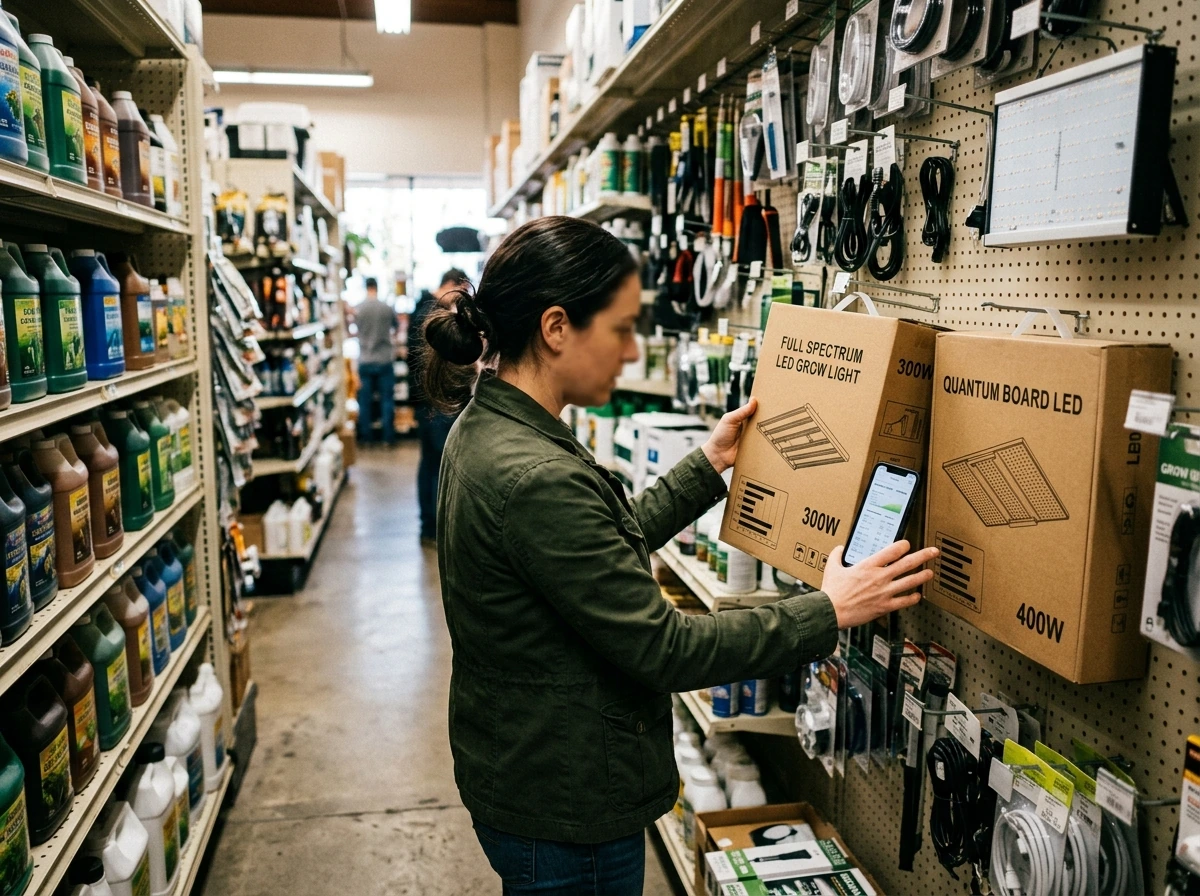
Buying directly from Mars Hydro, ViparSpectra, Spider Farmer, or similar brands gives you access to the full product line, sometimes better pricing on bundles, and direct warranty support. Mars Hydro's return policy requires returns or exchanges to be initiated within 30 days of delivery, and for products shipped directly from China, they offer free replacement parts within 5 years, which is a solid long-term coverage commitment. ViparSpectra similarly offers a 30-day return policy covering quality-related issues, including return shipping costs within that window. The downside of buying direct is that shipping from overseas can take longer, and returns are slightly more logistically complicated than a domestic Amazon return.
Specialty grow supply shops
Hydroponics and grow supply shops, both online (like HTG Supply, Growers House, and BuildASoil) and brick-and-mortar, are underrated for this purchase. The staff at a good specialty shop actually know what a PPFD map is and can help you match a light to a specific tent size. You won't always get the lowest price, but you'll often get better pre-sale guidance and the ability to ask follow-up questions. If you're setting up your first tent or scaling a commercial run, that advice has real dollar value.
Home Depot, Lowe's, and Walmart
These are not ideal for serious grow light shopping, but they're worth mentioning. Home Depot and Lowe's carry a narrow selection of horticultural lighting, mostly lower-wattage bulbs and basic grow panels aimed at seedlings or houseplants. Both have reasonable return windows: Home Depot allows returns on most merchandise within 90 days, and Lowe's generally gives you 90 days as well (though certain items require a return to be initiated within 48 hours of delivery). Walmart's return window for electronics is 30 days, and marketplace sellers on Walmart's site may apply their own restocking fees. These stores are fine if you need something basic today and want a local fallback, but for anything beyond a small supplemental light, shop elsewhere.
Wayfair
Wayfair occasionally surfaces LED grow lights through its marketplace, with returns accepted up to 30 days after delivery for unused items. It's not a primary destination for grow lighting, but worth checking if you're hunting a specific model or a deal. The selection is inconsistent and the product detail pages aren't optimized for growers comparing specs.
How to buy LED grow lights: quick decision checklist
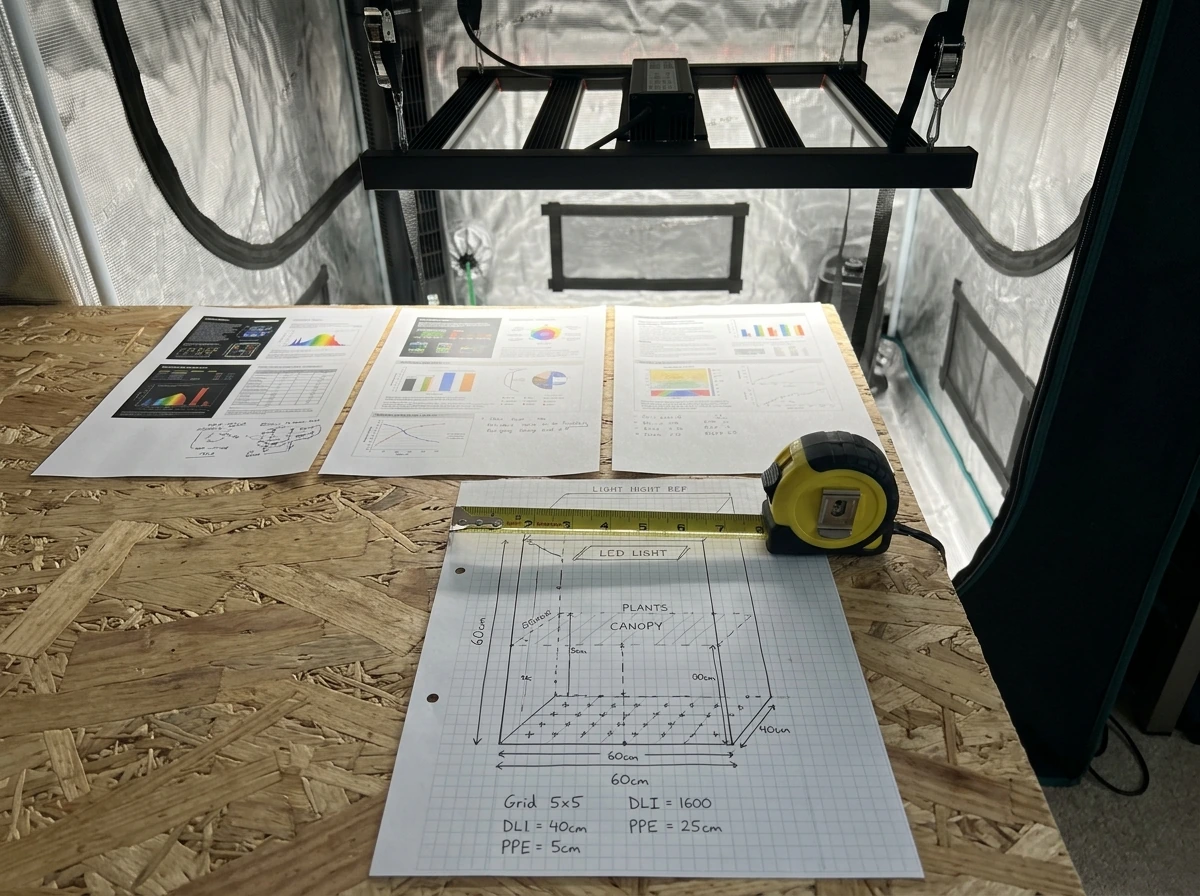
Before you search a single listing, nail down these six things. They'll cut your decision time in half and prevent the most common buying mistake, which is choosing a light based on marketing claims rather than actual fit.
- Measure your grow space: exact dimensions in feet (length x width x height). A 4x4 tent needs a meaningfully different light than a 3x3 or 5x5.
- Identify your primary crop and growth stage: are you vegetating, flowering, or running a mixed cycle? Flowering plants need higher light intensity, typically 600–900+ µmol/m²/s at canopy level.
- Set a realistic budget: entry-level panels (under $100) work for seedlings and small veg spaces; mid-range ($150–$400) handles most 3x3 and 4x4 tents; premium fixtures ($400–$1,000+) are for serious 4x4 to 5x5 flowering runs or commercial use.
- Check your power situation: know your circuit's available amperage and whether you're running 120V or 240V. Some high-output fixtures require 240V.
- Confirm your mounting setup: what's your ceiling height? Lights need vertical clearance to hit the right hanging distance. ViparSpectra, for example, recommends 16–20 inches above canopy during veg for their Pro Series fixtures.
- Decide on spectrum needs: most modern LEDs are full-spectrum and cover the full photosynthetically active radiation (PAR) range. If you're growing microgreens or seedlings, a simpler spectrum works fine. For flowering, full-spectrum with a strong red component matters more.
What specs matter most (wattage, coverage, spectrum, efficiency)
Grow light listings are full of numbers that sound impressive but tell you almost nothing on their own. Here's what actually matters and how to read it.
True wattage (not "equivalent" wattage)
Ignore "equivalent" wattage claims entirely. What you want is the actual draw, measured in watts at the wall. A 150W fixture draws 150W. A listing that claims "600W equivalent" but draws 100W is just a 100W light. The Mars Hydro FC-E1500, for example, is a 150W fixture, and that's the number that actually matters for your circuit load and output expectations.
Efficiency: µmol/J (photon efficacy)
Efficiency is expressed in µmol/J (micromoles of photons per joule of energy). It tells you how much usable light you get per watt consumed. Anything at or above 2.5 µmol/J is competitive for mid-range fixtures. High-end commercial-grade bars push 3.0 µmol/J and above. The Mars Hydro FC-E1500 claims 2.85 µmol/J, which is solid for its class. If a listing doesn't state a µmol/J number, that's a red flag worth noting.
PPFD at canopy height
PPFD (Photosynthetic Photon Flux Density) measured in µmol/m²/s tells you the actual light intensity hitting your plants at a specific distance. A well-documented fixture will include a PPFD map showing values across the footprint at a defined hanging height. The Spider Farmer SE7000, for example, delivers a maximum PPFD of 1000 µmol/m²/s at 54 cm (about 21.5 inches) over a 5x5 area, which is a useful, testable claim. Be skeptical of single-point PPFD numbers listed without a height or without a full map. A peak reading in the dead center of the footprint tells you almost nothing about edge coverage.
Coverage area
Coverage area claims in listings are often the veg footprint, not the flowering footprint. Flowering coverage is always smaller because plants need higher intensity during bloom. A light marketed as covering a 4x4 in veg might realistically cover a 3x3 for flowering. Look for brands that state both, and when they don't, estimate the flowering footprint is roughly one step smaller than the listed coverage.
Spectrum
Full-spectrum LEDs replicate sunlight across the PAR range (400–700 nm) and often include some near-infrared (700–800 nm) and UV. For most growers, a quality full-spectrum fixture is the right call regardless of crop. Avoid single-band "blurple" (blue + red only) panels for serious grows. They're outdated technology and real-world performance doesn't justify the cost savings compared to modern white-chip or full-spectrum bar lights.
Matching the light to your grow setup
Pairing the right light to your space is the single highest-leverage decision you'll make. Here's a practical breakdown by tent size and use case.
| Grow Space | Typical Use Case | Target Wattage (actual draw) | Target PPFD at Canopy | Budget Range |
|---|---|---|---|---|
| 2x2 tent | Seedlings, clones, small veg | 40–65W | 200–400 µmol/m²/s | $50–$120 |
| 3x3 tent | Veg or light flowering | 100–200W | 400–700 µmol/m²/s | $100–$250 |
| 4x4 tent | Full-cycle growing, flowering | 200–400W | 600–900 µmol/m²/s | $200–$500 |
| 5x5 tent | High-yield flowering | 400–650W | 800–1000+ µmol/m²/s | $400–$900 |
| 6x6+ / commercial | Multi-plant or commercial runs | 650W+ | 1000+ µmol/m²/s | $700+ |
Ceiling height matters just as much as footprint. If your tent is only 5 feet tall, a high-output bar light that needs to hang 24 inches above canopy to avoid light burn will leave you with almost no vertical grow space. Always calculate your usable grow height: total tent height minus hanging distance minus estimated plant height at harvest. For most 6-foot tents running a full cycle, you want at least 18–24 inches of adjustability in the hanging hardware.
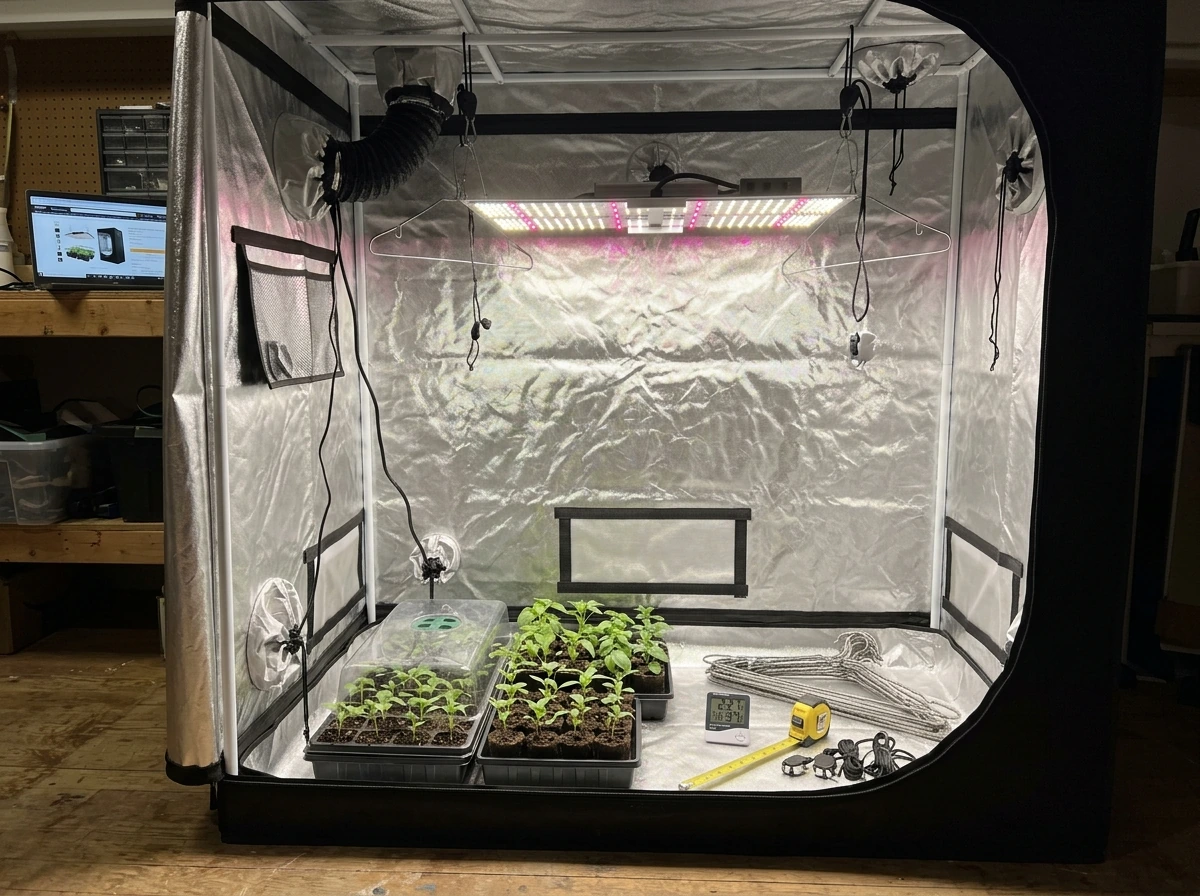
Heat management is the other variable most beginners underestimate. Higher-wattage fixtures in small tents can push ambient temps above 85°F without adequate ventilation, which suppresses growth. If you're running a sealed or low-ventilation setup, factor in the fixture's heat output and whether it'll require a larger inline fan upgrade.
How to compare products and avoid bad listings
LED grow light listings, especially on Amazon and Walmart, are rife with inflated claims. Here's how to read them critically and filter the real options from the noise.
- Check for an actual µmol/J efficiency rating: if it's not listed, search the brand's website or product manual for a spec sheet. No efficiency claim often means the manufacturer knows the number isn't impressive.
- Look for a PPFD map, not just a peak PPFD number: the map shows how light is distributed across the entire footprint at a stated hanging height. This tells you edge coverage, which matters for plants at the perimeter.
- Verify the actual wattage draw: it's usually listed in the tech specs section, not the headline. If you see "replaces 1000W HPS" as the headline wattage, keep scrolling to find the real number.
- Read the one and two-star reviews specifically: these will tell you about early failures, DOA units, and customer service experiences that matter when a fixture fails mid-cycle.
- Check the warranty terms before buying: a 1-year warranty on a $300 fixture is weak. Look for brands offering 3 years minimum on the fixture itself.
- Confirm the seller: on Amazon, check whether the item is sold by Amazon or a third-party marketplace seller, since this changes your return process. On Walmart's site, marketplace seller policies can include restocking fees.
- Avoid listings with no brand presence outside of Amazon: if there's no dedicated website, no downloadable spec sheet, and no presence in the growing community, that's a strong signal to skip it.
One more thing worth flagging: marketing claims like "PPFD up to X µmol/m²/s" are nearly always the maximum center-point reading at a very close hanging distance, not a real-world average across your canopy. A listing claiming PPFD up to 420 µmol/m²/s at hanging height doesn't tell you what the corners of your tent are getting. This is why PPFD maps matter, and why listings that skip them deserve skepticism.
Buying near you: how to find retailers and confirm availability
If you need a light today, or you want to see a product before buying, local options exist, though they're limited. Here's how to find them without wasting time.
- Search Google Maps for 'hydroponics store near me' or 'grow supply shop near me' rather than searching for specific brands. Specialty shops carry more serious fixtures than general hardware stores and staff who can actually help.
- Call ahead and ask whether they carry the specific brand or wattage class you're looking for. Most local shops have limited stock, and visiting without confirming availability is a wasted trip.
- Check Home Depot and Lowe's online inventory tools before driving: both retailers let you filter by store availability on their websites. Their grow light selection is thin, but it's there for basic needs.
- Check Walmart's website with your zip code filtered for in-store pickup. The selection skews budget and basic, but for a seedling tray light or a small supplemental fixture, it can work in a pinch.
- Look for local Facebook Marketplace or Craigslist listings for used fixtures if budget is tight. LED grow lights hold up well and a used fixture from a reputable brand (Spider Farmer, Mars Hydro, etc.) at 50–60% of retail is often a smart buy.
One honest note: unless you're in a major metro area with an active growing community, the local selection for mid-range to premium LED grow lights is going to be thin. For anything above entry-level, online ordering is almost always faster, cheaper, and gives you more options. The only compelling reason to buy locally is same-day need or the ability to physically inspect a fixture before committing.
Next steps after you buy (installation, setup, and verifying fit)
Once the light arrives, resist the urge to immediately hang it at maximum power and walk away. A few setup steps will protect your plants and confirm you actually got what you paid for.
Verify the unit before installing
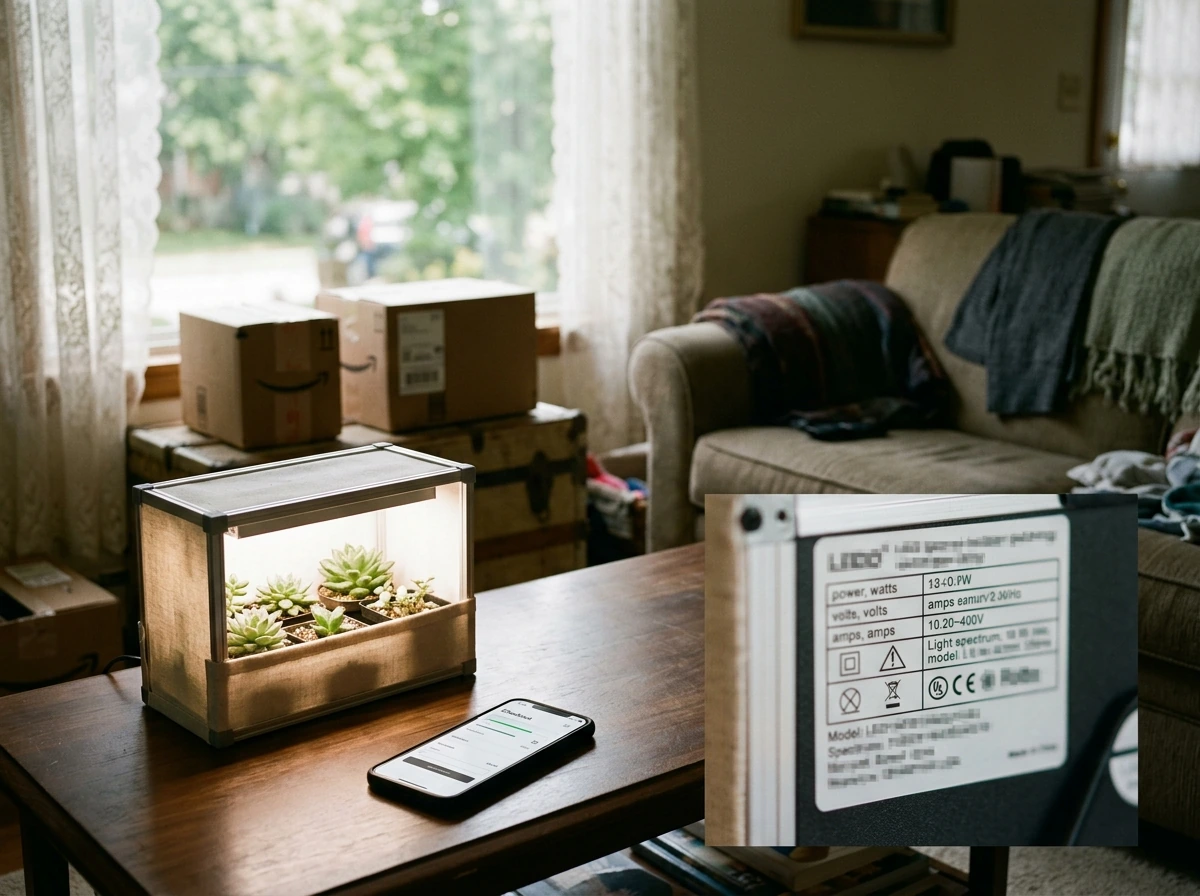
Unbox the fixture and inspect it before hanging: check for cracked lenses, loose driver connections, bent bars (for strip-style lights), and that all included hardware (hangers, rope ratchets, power cord) is present. Power it on for a few minutes outside the tent first. If anything looks or smells off, document it with photos and contact the seller immediately. Most return windows start at delivery date, so the clock is already running.
Set your initial hanging height
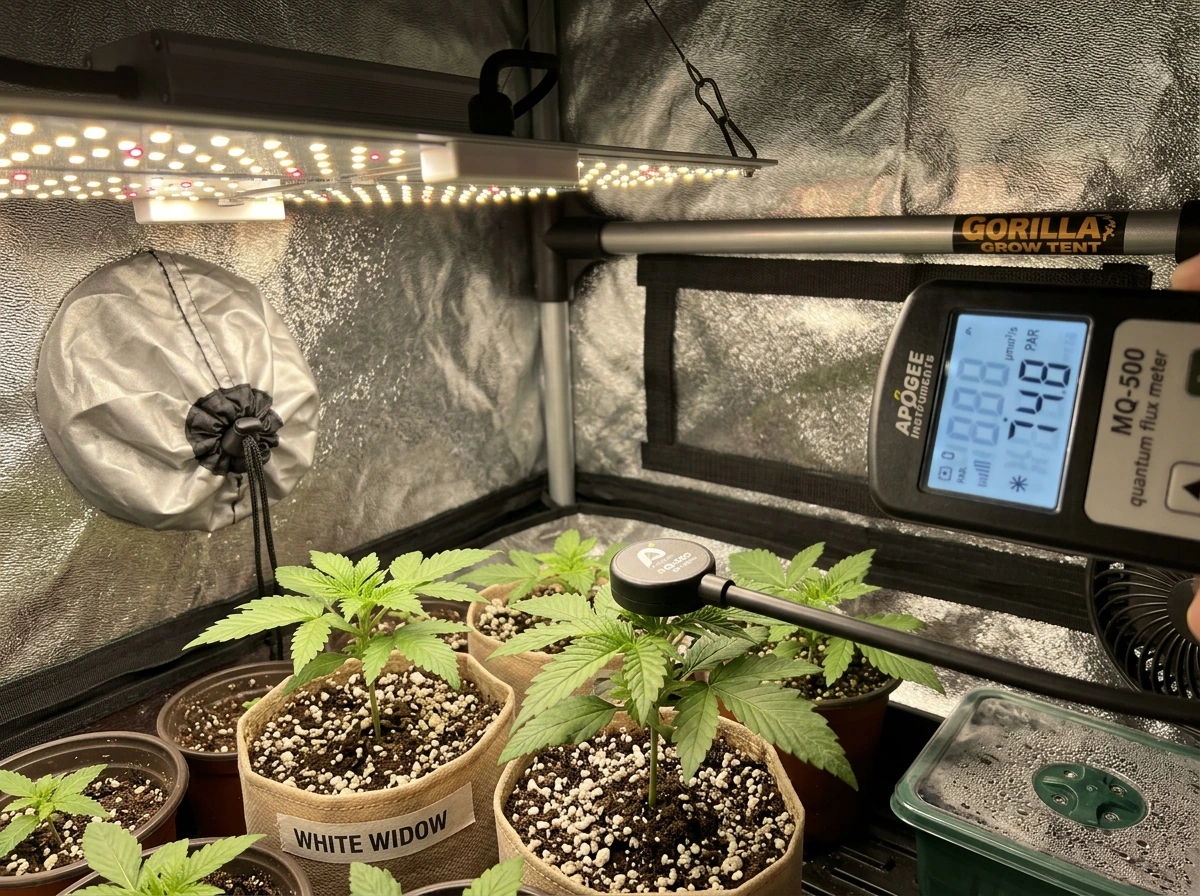
Start at the manufacturer's recommended height for your growth stage. For veg, this is typically 18–24 inches above the canopy. For seedlings, even higher, often 24–30 inches, to avoid light stress on tender plants. ViparSpectra recommends 16–20 inches for their Pro Series during veg, which is a reasonable middle-ground baseline for most mid-range fixtures at 50–75% power during early stages. Don't run a new fixture at full intensity immediately. Ramp up over the first few days while monitoring for leaf curl, bleaching, or tacoing, which are signs of light stress.
Confirm your coverage matches the space
If you have a PAR meter or can borrow one, take a quick PPFD reading at canopy level at the center and four corners of your space. You're looking for reasonably even distribution, not a hot spot in the middle with dark corners. If you're seeing a ratio of more than 2:1 between center and corners, your hanging height or fixture placement needs adjustment. No PAR meter? Watch how your plants respond in the first two weeks: even growth across the canopy is a good proxy for even light distribution.
Check your temps and dial in the environment
After 30–60 minutes of running at your target intensity, check the ambient temperature in the tent. You want 70–80°F with lights on for most crops. If you're pushing above 82–84°F, you need either more airflow, a higher-CFM inline fan, or to reduce the light's output. Running hot for an entire grow cycle costs you yield and stresses plants in ways that are hard to recover from.
Narrow your options and take action
If you're still in the shopping phase, here's how to move from browsing to buying without second-guessing yourself for another week. Start with your tent size and flowering vs. veg use case. Use the wattage and PPFD targets in the table above as your filter. Pull up two or three fixtures that hit those targets from brands with documented spec sheets and real warranty coverage. If you want deeper comparisons across specific models, the best LED plant grow lights reviews sections of this site cover head-to-head performance in detail. Pick the one with the best efficiency number (µmol/J) at your budget, confirm the seller's return policy, and order it. You'll know within two weeks whether it's performing as expected, and that's well within any reputable return window.
FAQ
How can I tell if buying on Amazon or Walmart will give me a hassle-free return?
Check the seller identity, not just the listing name. On marketplace sites, “sold by” and “shipped by” can change the return window, whether you pay restocking fees, and how warranty claims are handled. If a product is “fulfilled by” the marketplace but warranty is from the brand, keep your invoice and note the seller for any RMA.
What’s the safest way to compare two lights if one listing uses “equivalent wattage” and the other doesn’t?
Use the light’s stated draw (watts at the wall) for two things: your electrical circuit load and your heat expectations. “Equivalent wattage” marketing can be wildly different, so treat it as a nameplate hint only, then verify actual watts and efficiency (µmol/J) to predict performance per consumed energy.
Why do some lights show “PPFD up to” numbers that seem too good to be true, and how should I evaluate them?
Look for both an advertised hanging height range and a PPFD map tied to a specific height. If a brand only gives a peak center-point PPFD without the exact distance, it’s difficult to know whether your corners will be under-lit. As a practical rule, only trust PPFD numbers that include height plus either a map or clearly defined test area.
Can I buy one stronger LED and use it for both veg and flower, or will it force me to compromise?
Yes, but do it with the fixture’s efficiency and your plant’s light level goals in mind. If you buy a light for flowering coverage but veg in a smaller footprint, you can reduce intensity (for example, lower the driver dimmer) and still keep canopy uniformity. Don’t assume “more watts” means you can run closer or at higher power without increasing stress.
How should I dim or ramp a new LED grow light so seedlings and early veg don’t get stressed?
New fixtures should be ramped, but also confirm the dimmer compatibility. Some drivers allow smooth dimming, others use coarse steps or have a minimum output that may still be too intense for seedlings. If your light has a known veg recommendation, use it as the starting point for height and intensity, then adjust based on leaf response.
Is the “4x4 coverage” on a listing meant for flowering, or is it usually a veg number?
Not necessarily. Square-foot “coverage” often refers to the area at a specific performance threshold, and many brands use veg settings to market the footprint. For flowering, expect a smaller effective area unless the manufacturer provides separate veg and bloom PPFD maps. If bloom specs aren’t given, plan roughly one step smaller footprint for peak intensity needs.
What should I consider for heat management when I’m deciding where to buy and which wattage to choose?
Heat is driven by fixture power, ambient room temperature, airflow, and whether your tent is sealed. Before buying, look for the fixture’s operating temperature guidance if available, and plan ventilation sized for your tent volume. A good next step is to run the light after install and measure tent temperature at your typical canopy height, not at the top vent.
If a brand won’t publish a PPFD map, what alternatives can I use to decide whether the light is legit?
If you can’t find a detailed PPFD map, you can still sanity-check by comparing efficiency (µmol/J), dimming range, and whether the fixture’s wattage matches the performance claims. Avoid lights where the specs are vague across all three, because that combination often correlates with inflated marketing. If you have a PAR meter, confirm distribution at center and corners during the first week.
How do I choose between two lights when my tent height is limited?
Start with the tent size, canopy-to-light height, and your crop stage, then decide based on the light’s documented PPFD at your intended hanging distance. A practical approach is to pick fixtures that meet your target flowering intensity across your canopy and use dimming for veg. If your tent is short, prioritize lights that can achieve adequate PPFD without requiring excessive hanging height above canopy.
Will buying from a marketplace third-party seller affect the manufacturer warranty?
In most reputable purchases, warranties are handled through the brand, but you must buy from an authorized seller to avoid coverage gaps. Before ordering, confirm whether the brand accepts warranty claims for products purchased on that marketplace, and keep screenshots of the listing, invoice, serial number, and seller name. If the fixture ships from a different region, confirm warranty terms match your location.
When is it worth buying locally instead of online for LED grow lights?
A local shop can help with fit, but only if they can show spec-based guidance. If the staff can’t discuss PPFD maps, efficiency, dimming behavior, or hanging height realities, you’re better off buying online from a seller with clear specs and predictable returns. The best “local” value is same-day installation, not better performance claims.
Next Articles
Best LED Grow Bulb: How to Choose the Right One
Choose the best LED grow bulb by coverage, PAR, spectrum, wattage, fit, and safety for your plants and space.
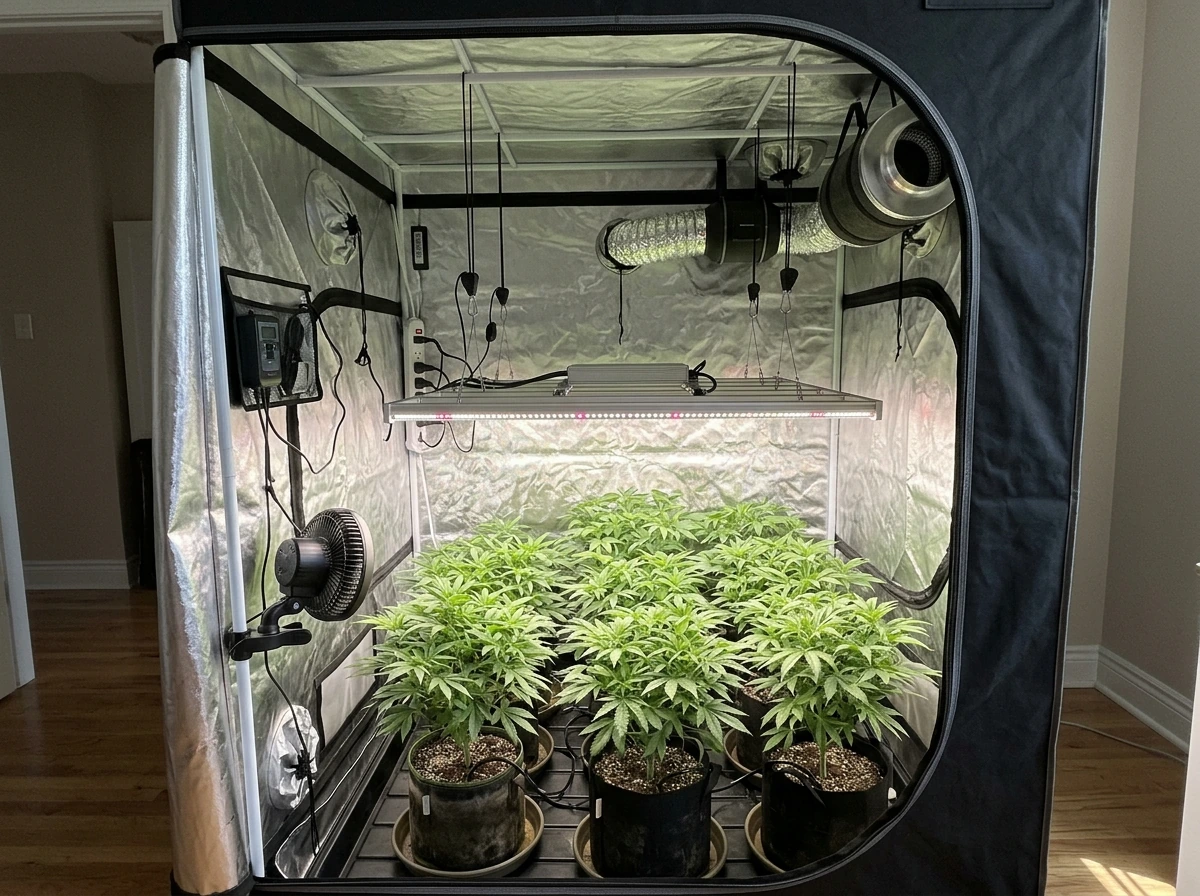
Best Indoor LED Grow Lights Reviews 2026: Buying Guide
2026 best indoor LED grow lights reviews plus buying guide: PPF PPFD coverage, spectrum, costs, setup tips
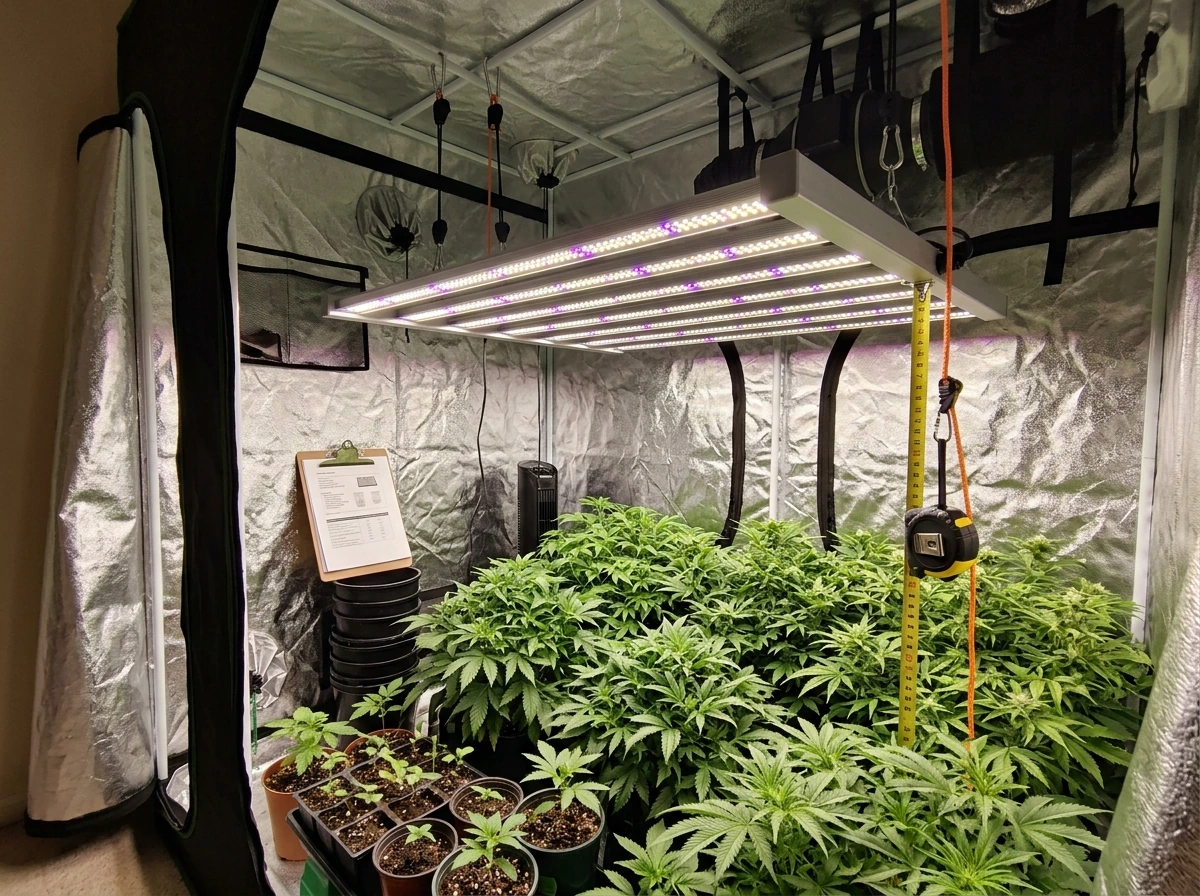
Best LED Grow Lights on Amazon: Buying Guide for Any Setup
Step-by-step guide to choose the best Amazon LED grow lights by PPFD, coverage, wattage, height, spectrum, and safety.