If you want a genuinely U.S.-made LED grow light, the short answer is: your options are narrower than the marketing suggests, but the quality ceiling is also higher. A handful of American manufacturers are building fixtures with real domestic engineering, traceable components, and warranties backed by people you can actually call. This guide will help you find them, verify their claims, match the right fixture to your grow space, and avoid the 'assembled in USA' trap that catches a lot of buyers.
Best American Made LED Grow Lights: USA Selection Guide
Marcus Rutherford
24 Mar 2026
What 'American-made' actually means for LED grow lights
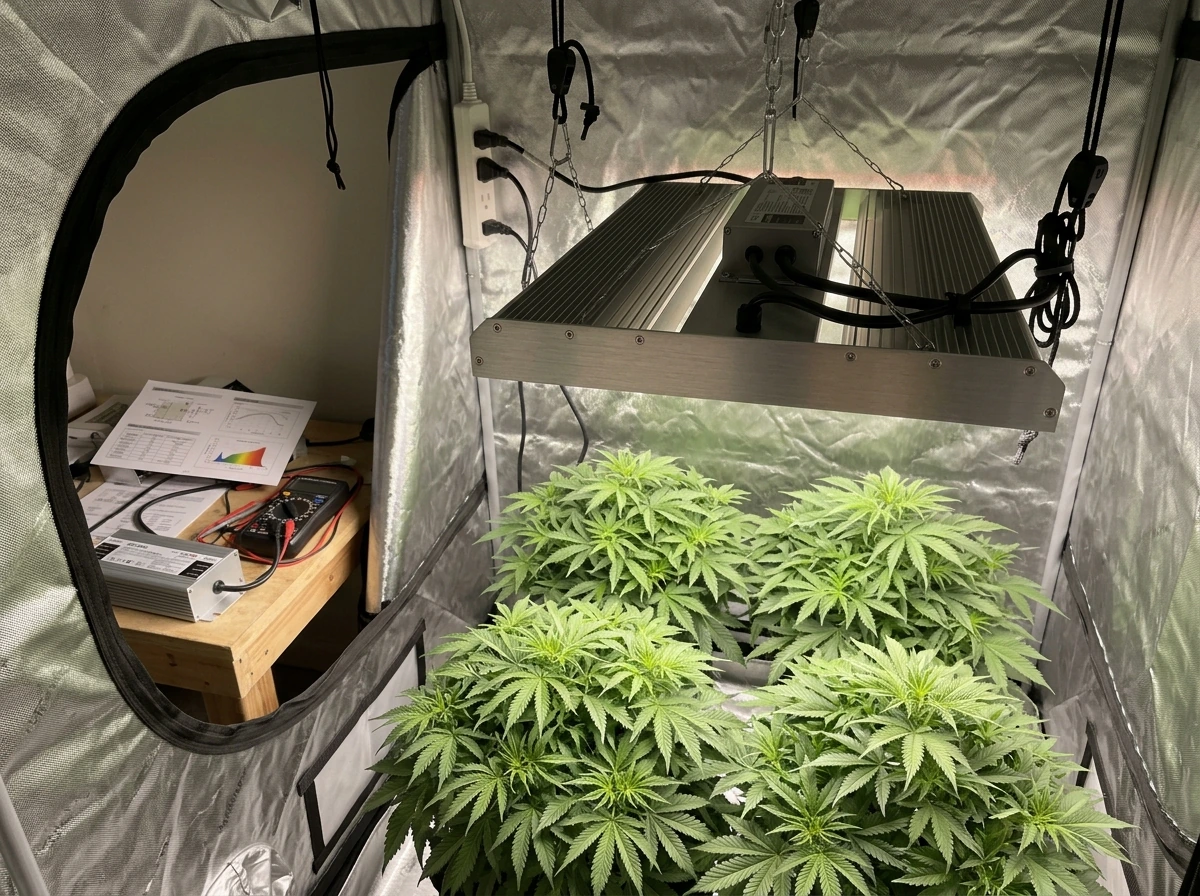
The FTC's standard for an unqualified 'Made in USA' claim is strict: all or virtually all of the product must be of U.S. origin. That means the final assembly, all significant parts and processing, and the manufacturing labor must occur domestically. This is codified under 16 CFR Part 323. Manufacturers making this claim must have a reasonable basis for it, and deceptive claims are enforceable under the FTC Act.
In practice, the LED grow light industry has a spectrum of claims. Here is what you will actually encounter when shopping:
| Claim Type | What It Usually Means | FTC Compliant? |
|---|---|---|
| Made in USA | All or virtually all U.S. origin, including significant parts | Yes, if accurate |
| Assembled in USA | Final assembly is domestic; components sourced globally (often China) | Qualified claim only |
| Designed in USA | Engineering/R&D is domestic; manufacturing is overseas | Not a manufacturing claim |
| Distributed from USA | Warehoused and shipped domestically; no U.S. manufacturing | Not a manufacturing claim |
Most grow lights sold under American brand names fall into the 'assembled in USA' or 'designed in USA' bucket. The LEDs themselves (chips), drivers, and PCBs are overwhelmingly sourced from Asia. A true 'Made in USA' fixture will use U.S.-sourced or domestically produced components for all significant parts, not just bolt together imported subassemblies in a warehouse. When evaluating a brand, ask specifically: where are the diodes sourced, where is the driver manufactured, and where does final assembly happen? Legitimate domestic manufacturers will answer this directly.
How to choose the right LED for your grow size and stage
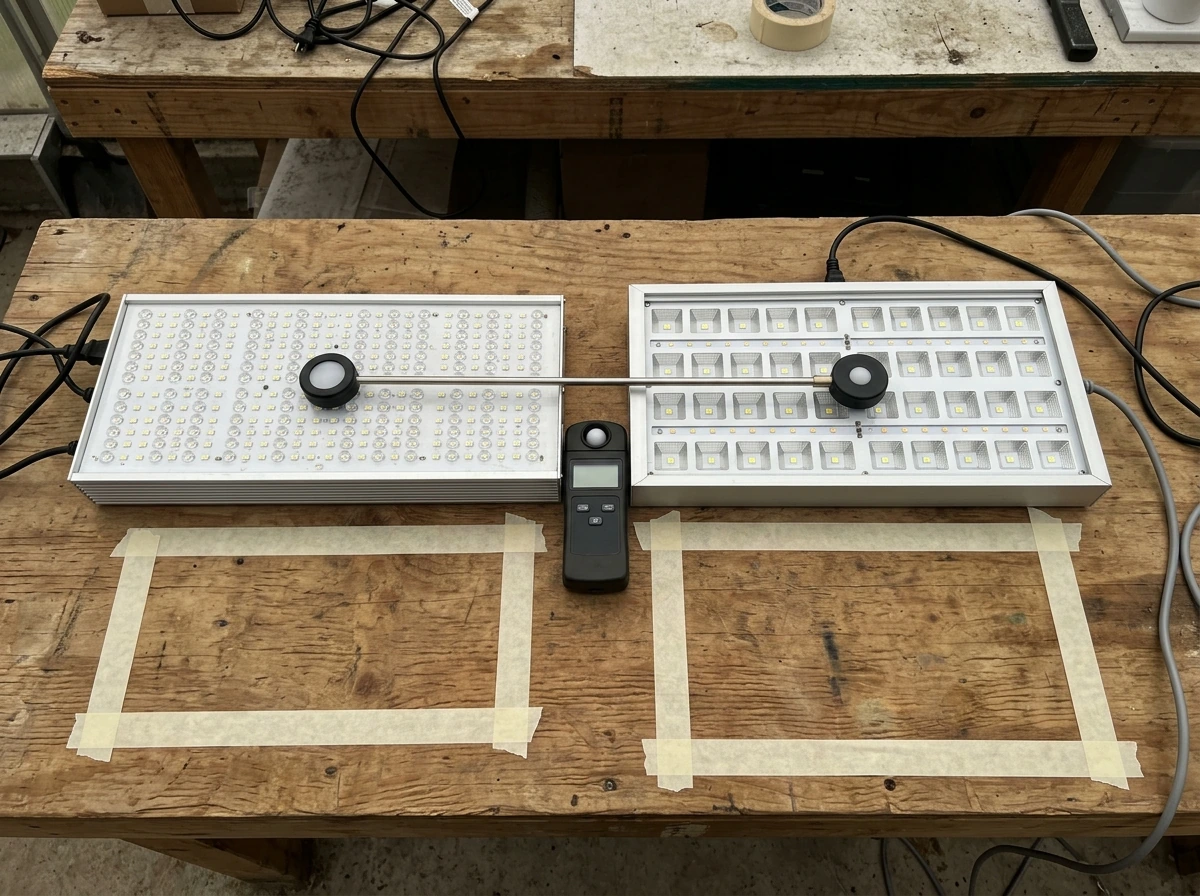
Before you compare brands, nail down three things: your canopy footprint, your target growth stage, and your electrical budget. These determine the wattage range and spectrum you need, and they will immediately cut your shortlist in half.
Matching coverage to canopy size
A practical rule for full-cycle LED growing is targeting 200 to 250 micromoles per square meter per second (µmol/m²/s) at minimum for vegetative growth, and 600 to 900 µmol/m²/s for flowering. For a 4x4 tent (16 sq ft, roughly 1.5 m²), you want a fixture delivering at least 600 to 800 µmol/m²/s at the canopy, which typically means a fixture drawing 400 to 600 true watts from the wall. A 3x3 tent needs roughly 250 to 400 real watts. A 5x5 space pushes into the 700 to 900 watt range if you want dense flower development. For multi-light commercial rows, plan on 40 to 50 watts of actual draw per square foot as a baseline, then adjust upward for high-PPFD crops like tomatoes or cannabis.
Spectrum: full-spectrum vs. targeted
Full-spectrum white LEDs (typically a broad 380 to 780 nm range with a color temperature between 3000K and 5000K, plus far-red around 730 nm) are the safest choice for most growers running the full vegetative-to-flower cycle under one fixture. They mimic natural sunlight more closely and make it easy to spot nutrient deficiencies visually. Targeted or 'blurple' spectra (heavy red and blue peaks with little green) were popular early in LED history but are largely obsolete for serious growers. If a domestic manufacturer is still pushing heavy blurple fixtures in 2026, that is a red flag. Modern U.S.-built fixtures should deliver white-dominant full-spectrum output with supplemental deep red (660 nm) and far-red (730 nm) for bloom stimulation.
Wattage: real draw vs. advertised
Always look at the actual wall draw (sometimes called 'true watts' or 'power draw'), not the 'equivalent' or 'replaces X watt HPS' marketing number. A fixture advertised as '1000W equivalent' may draw only 200 to 300 true watts. That is fine if the PPF output matches your needs, but you need to compare apples to apples. Check the spec sheet for power draw (watts), photosynthetic photon flux (PPF in µmol/s), and efficacy (µmol/J). Those three numbers tell you everything you need to know about a fixture's real output.
Key performance specs to compare
Here are the four technical metrics that separate genuinely high-performing fixtures from marketing-heavy boxes. If a manufacturer cannot provide these numbers with third-party verification, move on.
PPF and efficacy (µmol/J)
PPF (photosynthetic photon flux) measures total light output in µmol/s. Efficacy (µmol/J) tells you how efficiently the fixture converts electricity into usable light. In 2026, a well-built LED fixture should hit at least 2.5 µmol/J. Top-tier commercial fixtures push 2.8 to 3.2 µmol/J. If a 'USA-made' light is rated below 2.0 µmol/J, it is not competitive with modern overseas options, let alone worth a domestic premium. Ask for an independent photometric test report, ideally from an IES-standard integrating sphere measurement, not just manufacturer-supplied data.
Driver quality and dimming controls
The driver is the most failure-prone component in any LED fixture. Quality drivers from brands like Meanwell (HLG series) or Inventronics are industry standards because they offer high power factor (above 0.95), low total harmonic distortion, and reliable thermal management. Dimming capability matters more than many hobby growers realize: being able to dial a fixture from 25% to 100% lets you match light intensity to plant stage, reduce heat during high-temperature weeks, and extend diode life significantly. Look for 0 to 10V dimming or onboard knob dimming at minimum. RJ45-networked dimming is worth paying for in multi-light commercial setups.
Thermal design and heat management
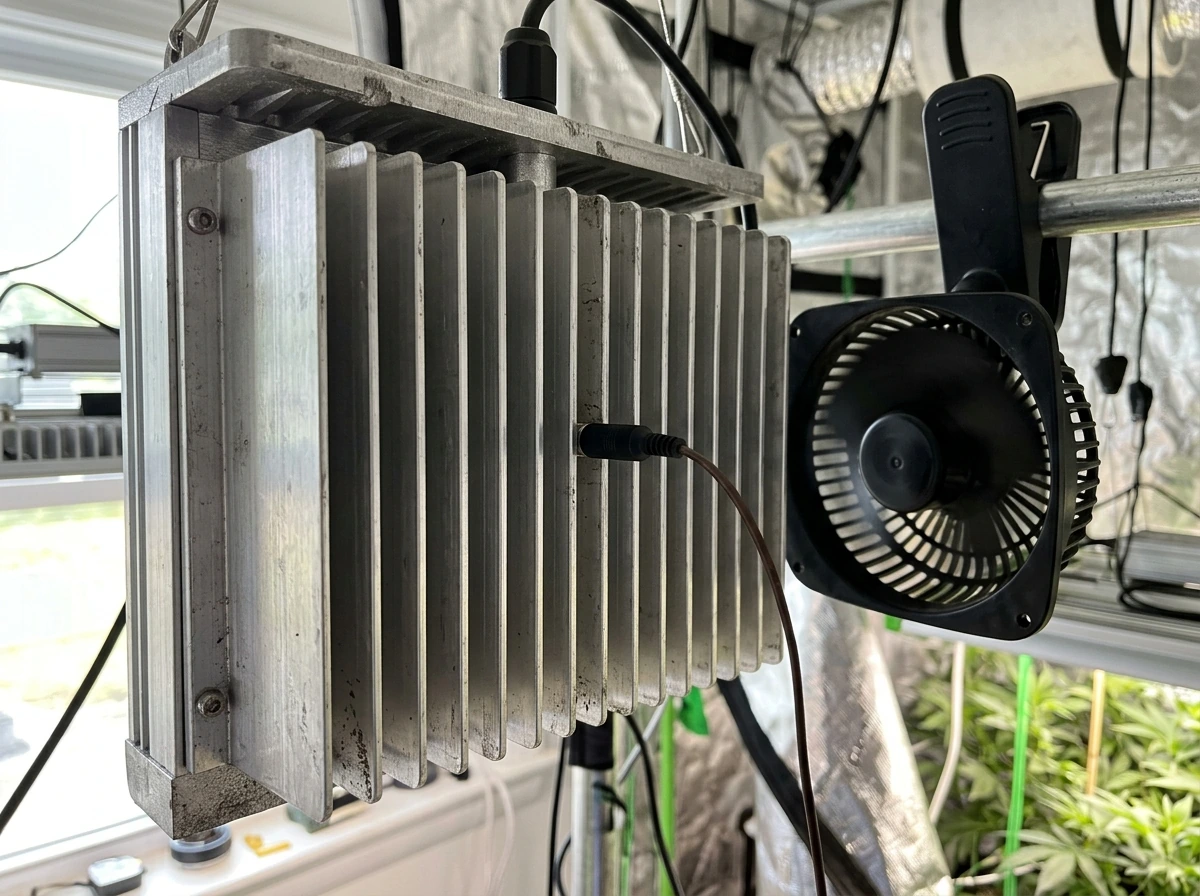
LED diodes degrade faster at high junction temperatures. A fixture with poor thermal design will lose output noticeably within 12 to 18 months. Look for thick aluminum heat sinks, passive cooling with well-spaced fin arrays, and fanless designs where possible (fans add noise and failure points in humid grow environments). Some commercial U.S. fixtures use active cooling for very high-density diode arrays, which is acceptable if the fans are IP65-rated and replaceable. Ask the manufacturer for their L90 or L70 rating (the hours at which the fixture retains 90% or 70% of initial output). A quality fixture should hit L90 at 36,000 hours or better.
Spectrum verification
Ask for a spectral power distribution (SPD) chart. This is a graph showing output across wavelengths from roughly 380 to 780 nm. A legitimate full-spectrum fixture will show a broad white curve with peaks in the red region (around 660 nm) and often a secondary far-red contribution near 730 nm. If all you get is a marketing phrase like 'sunlike spectrum' with no SPD data, that is not enough. Third-party SPD measurements from a lab or a trusted reviewer are the gold standard.
Best U.S.-made LED grow light picks by use case
The following recommendations are organized by grow scenario, not by brand loyalty. These reflect fixtures with verified or strongly evidenced domestic manufacturing, strong real-world performance data, and warranties backed by U.S.-based support. Note that 'Made in USA' claims should still be independently verified using the steps in the next section.
Hobby tent growers (3x3 to 4x4)
California Lightworks SolarSystem and MegaDrive series lights are assembled in the U.S. with documented domestic production steps. Their SolarSystem 1100 draws around 600 watts true power and is well-suited to a 4x4 canopy, delivering solid full-spectrum output with programmable spectrum control. It is one of the few U.S.-linked brands offering real spectrum tunability at the hobby level. Growers running a 3x3 tent should look at the SolarSystem 550 (around 300 true watts), which keeps heat manageable in smaller enclosures. Efficacy on current models sits in the 2.4 to 2.6 µmol/J range, competitive for domestically built hardware.
Black Dog LED (Colorado-based) produces their PhytoMAX series with a strong claim to U.S. manufacturing. Their PhytoMAX-4 line (400W, 600W, 1000W models) covers the 3x3 through 5x5 range and ships with detailed PAR maps. The PhytoMAX-4 600W is a strong 4x4 option: roughly 600 true watts, full-spectrum with supplemental UV and far-red, and a 5-year warranty backed by U.S. customer support. It is a premium-priced fixture, but the warranty and domestic support are real differentiators when something goes wrong mid-cycle.
Mid-scale growers (5x5 to 4x8 rooms)
For growers moving beyond a single tent into a dedicated room or multiple canopy zones, Growers Choice ROI series (California-based, U.S. assembled with Meanwell drivers) offers good value. The ROI-E720 draws 720 watts and covers a 4x8 or two adjacent 4x4 zones well. Efficacy is rated around 2.7 µmol/J, which is genuinely competitive. Dimming is handled via Meanwell HLG drivers with 0 to 10V input, so it integrates cleanly with environmental controllers. These are widely used fixtures with a large community of real-world data, which makes troubleshooting easier.
Commercial scaling (multi-light, high-PPFD environments)
For commercial operations, Fluence (Austin, Texas) produces some of the most rigorously documented fixtures in the industry. The SPYDR and VYPR series are designed for multi-layer vertical farms and greenhouse production with efficacy ratings up to 3.0 µmol/J on current models. Fluence provides full IES photometric files, PPFD maps, and detailed installation documentation, which is what commercial facilities need for compliance, insurance, and yield modeling. Their U.S. manufacturing and engineering claims are among the most documented in the domestic market. Cost is significant (commercial pricing starts in the thousands per fixture), but for dedicated production the long-term energy savings and output consistency justify it.
P.L. Light Systems (with North American operations) and Heliospectra (U.S. operations) are also worth evaluating for greenhouse-scale commercial installations, particularly for supplemental lighting in mixed-light environments. Both offer spectral control and integration with building management systems.
Quick comparison of picks by use case
| Brand / Model | True Wattage | Target Space | Efficacy (µmol/J) | Dimming | Best For |
|---|---|---|---|---|---|
| California Lightworks SolarSystem 550 | ~300W | 3x3 | ~2.5 | Yes (programmable) | Hobby, veg-to-flower |
| California Lightworks SolarSystem 1100 | ~600W | 4x4 | ~2.5–2.6 | Yes (programmable) | Hobby to semi-pro |
| Black Dog PhytoMAX-4 600W | ~600W | 4x4–5x5 | ~2.5 | Yes | Quality-focused hobbyist |
| Growers Choice ROI-E720 | 720W | 4x8 / two 4x4 | ~2.7 | 0–10V (Meanwell) | Mid-scale, multi-zone |
| Fluence SPYDR 2x / VYPR series | Varies (600W+) | Commercial rows | Up to 3.0+ | Yes (networked) | Commercial production |
How to verify a manufacturer's 'Made in USA' claim
Marketing copy is not verification. Here is a practical process for confirming a domestic manufacturing claim before you spend money.
- Ask directly in writing: Email or call the manufacturer and ask specifically where final assembly occurs, where the LED diodes are sourced, and where the driver is manufactured. Legitimate domestic producers will answer this without hesitation. Vague answers or deflection to 'designed in USA' language are red flags.
- Request the spec sheet: A real spec sheet includes power draw (watts), PPF (µmol/s), efficacy (µmol/J), driver brand and model, operating temperature range, IP rating, and warranty terms. Missing entries or vague ranges suggest either an overseas product being relabeled or an immature manufacturing process.
- Check for FTC-compliant labeling: Look for 'Made in USA' on the fixture itself (not just the packaging or website). Under 16 CFR Part 323, unqualified Made in USA representations must meet the 'all or virtually all' standard. If the fixture says 'Assembled in USA,' that is a different (qualified) claim.
- Look for third-party test data: IES photometric reports, DLC (DesignLights Consortium) listings, or university extension grow light testing data (UC Davis, Purdue, Cornell all maintain grow light testing programs) provide independent verification of output claims.
- Check warranty terms and support location: A 3- to 5-year warranty backed by a U.S. address, a real phone number, and documented repair/replacement procedures is evidence of genuine domestic infrastructure. Overseas-made products re-labeled as domestic tend to have thin or offshore-only warranty support.
- Search for customer verification: Grow forums, Reddit communities (r/microgrowery, r/spiders_farmer and similar), and YouTube growers who have opened fixtures and identified components provide real-world confirmation that marketing claims hold up.
Installation and performance tips
Even the best fixture underperforms if it is mounted wrong or run without accounting for your space's thermal dynamics. Here are the practical installation details that matter most.
Mounting height and PPFD
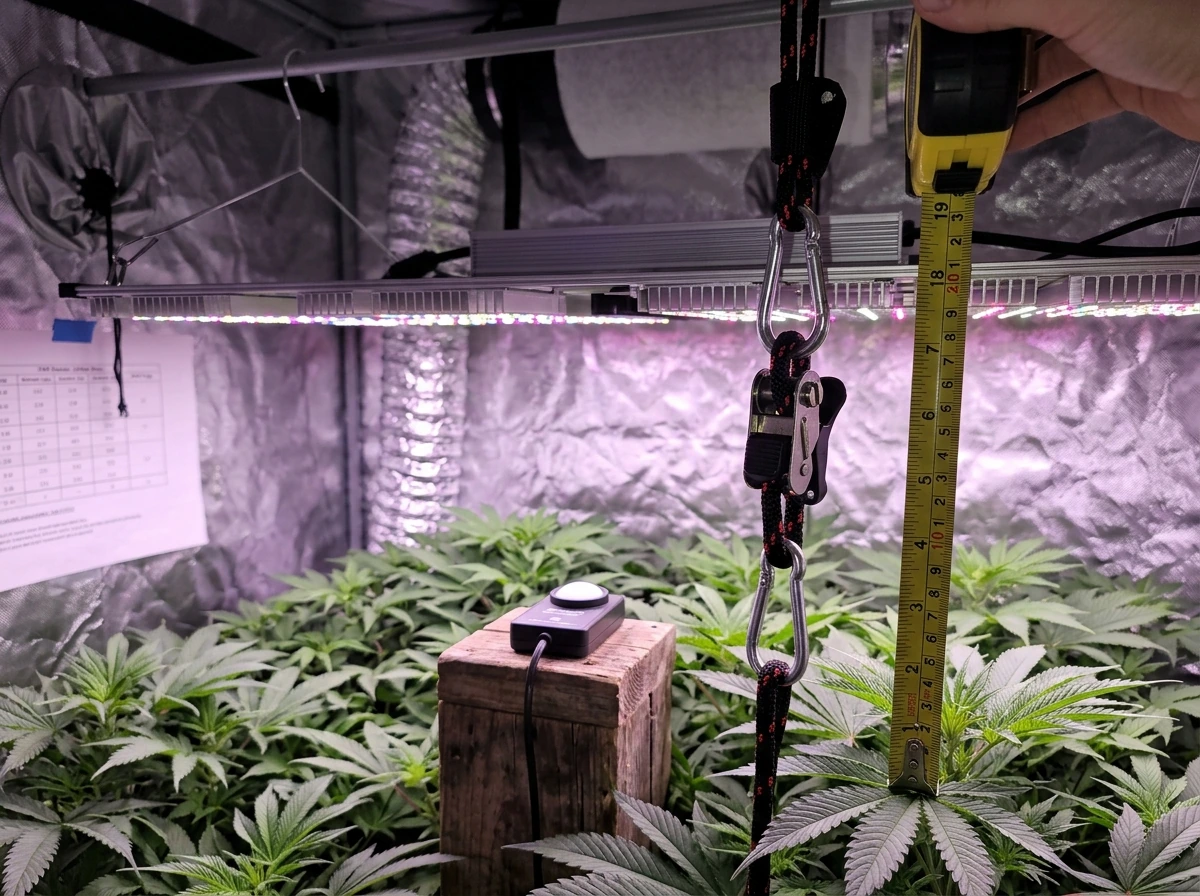
Follow the manufacturer's PAR map, not a generic rule of thumb. Most full-spectrum LED fixtures need to be mounted 18 to 24 inches above the canopy during flowering to avoid light stress (photoinhibition) in the center of the coverage zone, while maintaining adequate intensity at the edges. Seedlings and clones do well at 24 to 36 inches with fixtures dimmed to 40 to 60% output. As plants mature into late veg, raise intensity gradually. Use a PAR meter (or a PAR meter app as a rough guide) to verify actual canopy readings rather than guessing from hang height alone.
Dimming and light schedules
Start new plants or clones at 50% power and ramp up over 10 to 14 days. This reduces transplant stress and gives roots time to establish before maximum photosynthetic demand. During late flower, running at 100% output for 12-hour cycles is standard for high-PPFD crops. If ambient temperatures in your space run above 82°F (28°C), drop the fixture to 80% output before you add cooling, since reducing light intensity lowers heat output significantly.
Spacing multiple fixtures
In a multi-light layout, overlap coverage zones by 20 to 30% to avoid hot spots at the center of each fixture and dark zones at the edges. For a 4x8 room with two 400W fixtures, mount them roughly 24 to 30 inches apart (center to center) and 18 to 22 inches above the canopy. Always check actual PPFD at multiple points across the canopy with a meter, especially the corners.
Cooling and airflow
LED fixtures still generate heat, and that heat goes somewhere in a sealed tent. Budget for an exhaust fan rated at roughly 1 CFM per watt of fixture draw, or plan for an active cooling system in larger enclosed spaces. Passive-cooled aluminum heat sinks on quality fixtures dissipate heat effectively as long as air is moving across them: stagnant air in a closed tent will cause fixture temperatures to rise and output to drop. Keep oscillating fans running during the photoperiod.
Your buying checklist and next steps
Use this checklist before you commit to any 'American-made' LED grow light purchase. Running through it takes about 20 minutes but can save you from a costly mistake.
- Confirm your canopy size and target PPFD for your primary growth stage
- Calculate required true wattage based on space (roughly 40–50W real draw per sq ft for flowering, 25–35W for veg)
- Request or locate a spec sheet with PPF (µmol/s), efficacy (µmol/J), true power draw, and driver brand
- Verify the manufacturing claim: ask the brand directly about diode source, driver source, and assembly location
- Check for a DLC listing or third-party photometric test report
- Confirm warranty length (3 years minimum, 5 years preferred) and that support is U.S.-based
- Look at real-world reviews on grow forums for evidence that the fixture performs to spec in actual grows
- Compare cost-per-watt and cost-per-µmol/s against competitive overseas options to understand the domestic premium you are paying
- Plan your mounting height, dimming schedule, and cooling setup before the fixture arrives
If you are still narrowing down options across different form factors and budgets, it is worth looking at broader LED grow light comparisons covering full-spectrum and high-wattage options that are not limited to domestic manufacturing. Sometimes the right move is a U.S.-assembled fixture, the best led grow bulb choice for many buyers, with a Meanwell driver and strong domestic support, even if the LED chips are imported, because that combination still gets you reliable performance and accessible warranty service. For practical advice on where to buy led grow lights, refer back to the buying checklist and next steps. The key is knowing exactly what you are buying and what 'made in USA' does and does not guarantee for your specific grow. best led plant grow light, with a Meanwell driver and strong domestic support, even if the LED chips are imported, because that combination still gets you reliable performance and accessible warranty service. The key is knowing exactly what you are buying and what 'made in USA' does and does not guarantee for your specific grow. best indoor led grow lights reviews
The domestic LED grow light market in 2026 is smaller than the marketing noise suggests, but the quality options that genuinely exist are very good. Do the verification work, match the fixture to your actual space, and insist on third-party performance data. That combination will serve you better than any brand claim on its own.
FAQ
How can I verify “Made in USA” versus “assembled in USA” when shopping for the best american made led grow lights?
If a brand cannot clearly separate “final assembly” from “significant parts,” treat the claim as weak. A practical test is to ask for a component origin list (LED diodes, driver, PCB, and any major mechanical subassemblies) plus the location of final test and packaging. If they only provide a marketing slogan, you do not have enough to confirm an unqualified “Made in USA” standard.
Is it ever worth buying a U.S.-based grow light when the LED chips are imported?
Yes, you can still choose a U.S.-backed option even if LED chips come from Asia, as long as the company provides domestic engineering control, documented driver/thermal design, and verifiable performance metrics (PPF, efficacy, and ideally third-party photometric results). Prioritize real output specs over origin labels if your goal is yield and reliability.
What’s the biggest spec-comparison mistake people make with best american made led grow lights?
Your most common mistake is comparing wattage equivalents instead of true power draw and PPF at the canopy. Two fixtures can both say “1000W equivalent” while one draws 250W and the other draws 450W, producing very different PPFD. Always compare watts from the wall, PPF, and efficacy together, then map to your tent size using a PAR/PPFD check.
How should I ramp intensity for clones and seedlings so I do not stress them?
Use a ramp schedule, not a sudden jump. A solid baseline is starting seedlings and clones around 40% to 60% power, then increasing over 10 to 14 days while watching canopy uniformity and leaf posture. Also re-check PPFD after any hang-height change because small height shifts can create noticeable intensity swings across the tent.
What should I do if my U.S.-made LED grow light runs hot or the output seems to drop?
If your space runs warm, do not only “reduce light,” also verify airflow and exhaust capacity. A good rule is to size exhaust to move roughly 1 CFM per watt of fixture draw for typical tent setups, then confirm fixture inlet temperatures with an IR thermometer if the manufacturer does not provide thermal limits. If you see output drop after a few weeks, thermal design or ventilation is the likely cause.
Can I connect best american made led grow lights to my environmental controller, and what dimming type should I look for?
Dimming compatibility matters for both performance and controller integration. Confirm whether the fixture accepts 0 to 10V, onboard knob dimming, or network control, then ensure your environmental controller’s output type matches. Mismatched dimming modes can leave you stuck at fixed power or cause unstable cycling.
Does dimming reduce light quality or spectrum, or is it safe to run low for long periods?
Yes, but check what the dimming range actually achieves. Some fixtures advertise dimming yet only deliver a narrow “useful” range, or the spectrum shifts at lower output. When possible, ask whether the manufacturer has dimming-specific PPF/efficacy data or at least performance curves, then validate with a PAR meter at your typical power level.
How do I dial in mounting height and spacing for uniform coverage without hot spots?
You will get more reliable planning by using a measured canopy PPFD map rather than relying only on hang height and tent dimensions. Mounting height targets differ by stage, but the real decision is how uniform your PPFD is across the corners and center. If corners are low, add fixtures, adjust spacing overlap, or dim asymmetrically rather than only raising one fixture.
What are practical indicators of long lifespan (L70/L90) beyond the warranty length?
If a fixture does not include a measurable L70/L90 life claim, you can still assess risk by looking for thermal design details like heat sink mass, fin geometry, and whether cooling is fanless or uses sealed, IP-rated replaceable fans. For high-humidity rooms, insist on humidity-rated fans or fanless designs, because fan failures are a major real-world downtime driver.
What questions should I ask about the driver and electrical quality when comparing U.S.-made LED fixtures?
Ask for the driver brand/model and whether it is a known industrial line, then request the electrical safety and performance details: power factor, total harmonic distortion, and the warranty terms for the driver separately if offered. Also confirm how the fixture handles transient power events (typical in garages or older circuits), because poor protection can reduce lifespan even when the LED board is well made.
Next Articles
Where to Buy LED Grow Lights: Best Places and How to Choose
Find the best places to buy LED grow lights near you and a checklist to choose the right spectrum, coverage, and wattage
Best LED Grow Bulb: How to Choose the Right One
Choose the best LED grow bulb by coverage, PAR, spectrum, wattage, fit, and safety for your plants and space.
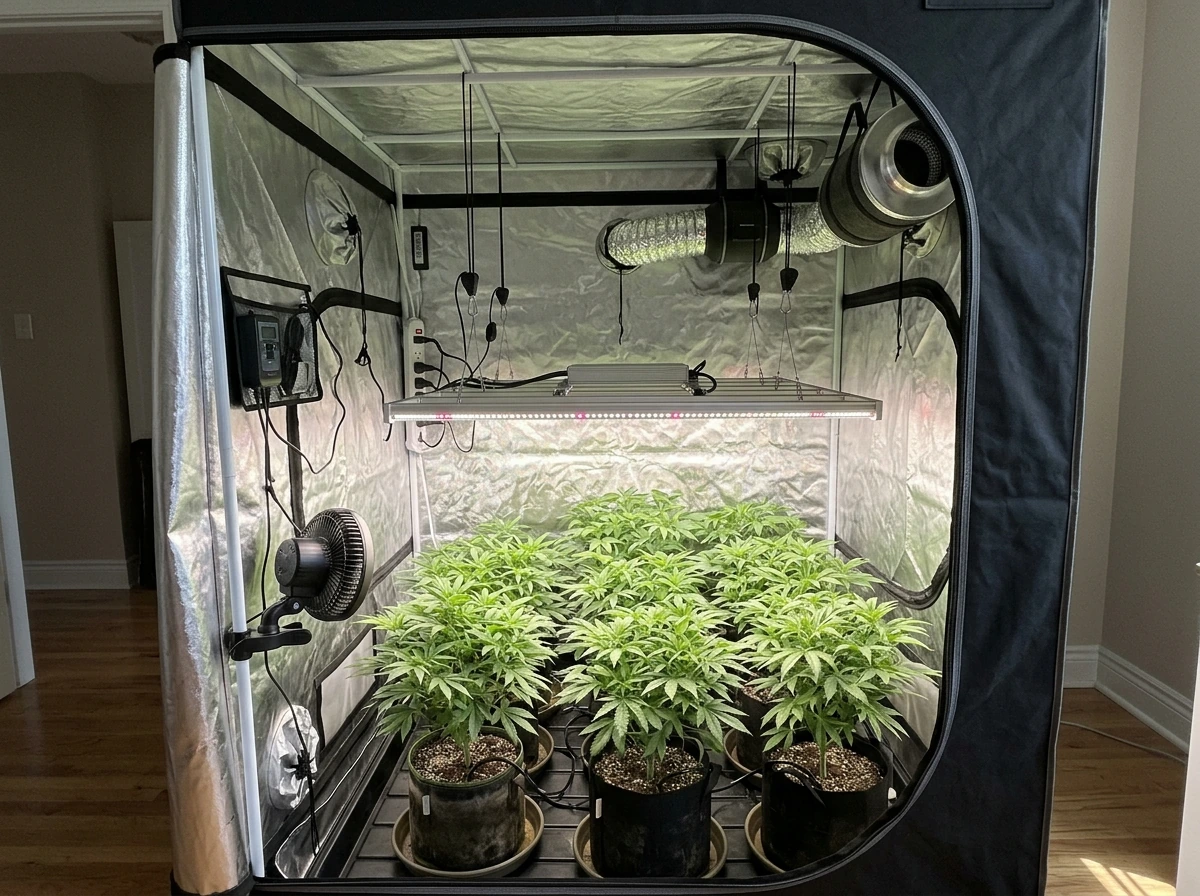
Best Indoor LED Grow Lights Reviews 2026: Buying Guide
2026 best indoor LED grow lights reviews plus buying guide: PPF PPFD coverage, spectrum, costs, setup tips