If you searched for the top LED grow lights of 2022, here is the honest answer: the best lights from that era are still genuinely competitive today, and the criteria you should use to evaluate them have not changed at all. What matters is real PPFD output at your canopy, coverage uniformity across your tent footprint, actual power draw (not marketing wattage), and efficiency measured in micromoles per joule. Any light that passes those tests in 2022 still passes them now. This guide breaks down exactly how to evaluate claims, which models held up, and how to match a light to your specific space and grow stage.
Top LED Grow Lights 2022: Buyer Guide by Space and Stage
Marcus Rutherford
24 Mar 2026
What "top" actually meant in 2022 (and still means today)
The grow light market in 2022 was flooded with inflated wattage claims and cherry-picked PPFD numbers. A fixture advertised as "1000W" might draw 200W from the wall. A PPFD number shown in a spec sheet might be measured at six inches from the lens rather than at a realistic canopy distance. Separating winners from hype required a consistent evaluation framework, and that framework is still the right one to use.
The real criteria for ranking a grow light come down to six things. Actual draw (watts consumed at the wall, not LED chip equivalent), PPFD at a realistic canopy distance (typically 18 to 24 inches), coverage uniformity across the stated footprint (not just the peak center reading), efficacy in μmol/J (how efficiently electricity becomes usable photons), spectrum relevance (full-spectrum white or targeted red/blue for specific stages), and driver and thermal quality (which predicts longevity). Any brand that publishes independent lab PPFD reports measured on a grid, like HLG does with their downloadable efficiency and PPFD reports for fixtures such as the HLG 600 Rspec, was doing things right. Brands that only publish a single center-point number at an unstated distance were hiding something.
Recommended specs checklist before you buy anything
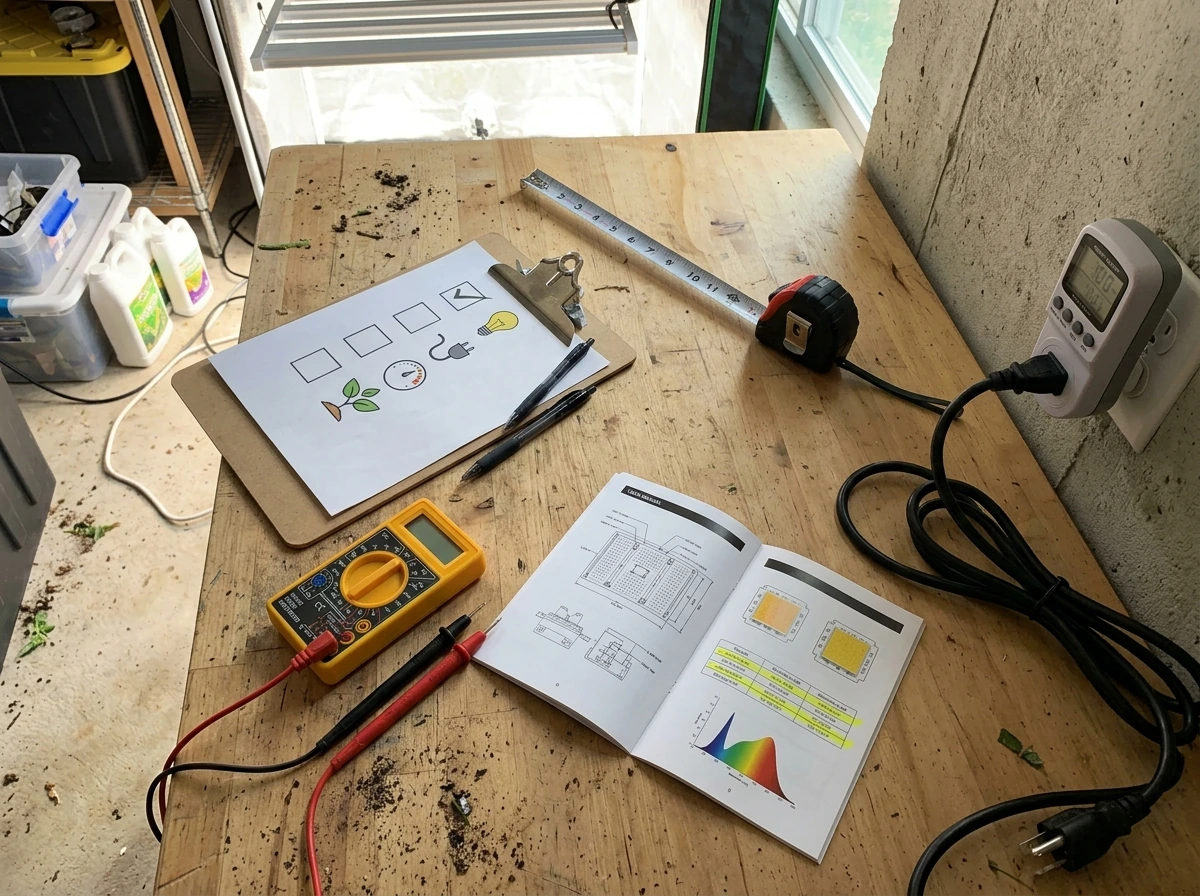
Before you even look at a product page, have this list ready. If a brand cannot answer every one of these points with hard numbers, move on.
| Spec | What to look for | Why it matters |
|---|---|---|
| Actual power draw | Listed in watts at the wall, not "equivalent" wattage | Determines real operating cost and heat load |
| PPFD at canopy | Measured at 18–24 inches, ideally via grid map | Shows usable light intensity at plant level |
| Efficacy (μmol/J) | 2.0+ for solid mid-range; 2.5–2.9 for premium | Higher = more light per dollar of electricity |
| Coverage area | At target PPFD (e.g., 800 μmol/m²/s), not max possible area | Marketing areas are often measured at low intensity |
| Spectrum | Full-spectrum white or R/B/FR blend with published SPD chart | Affects veg quality, flowering, and canopy penetration |
| Driver brand/type | Meanwell HLG or ELG series preferred; dimmable | Drives longevity and stable output over time |
| Dimming control | 0–10V or onboard dial; some with RJ port for daisy-chain | Lets you match intensity to plant stage |
| Thermal design | Passive heatsink or low-noise active cooling; stated max temp | Heat management directly affects LED lifespan |
| Safety certs | UL, ETL, or CE listed | Indicates electrical safety testing was done |
Best LED grow lights by grow area
Coverage needs scale with tent size, but so does the margin for error. A light that is slightly underpowered in a 2x2 is a minor inconvenience. The same proportional shortfall in a 4x4 kills your yield. Here is how the 2022 standouts lined up by footprint, and why each made the cut.
2x2 tents (up to about 4 square feet)
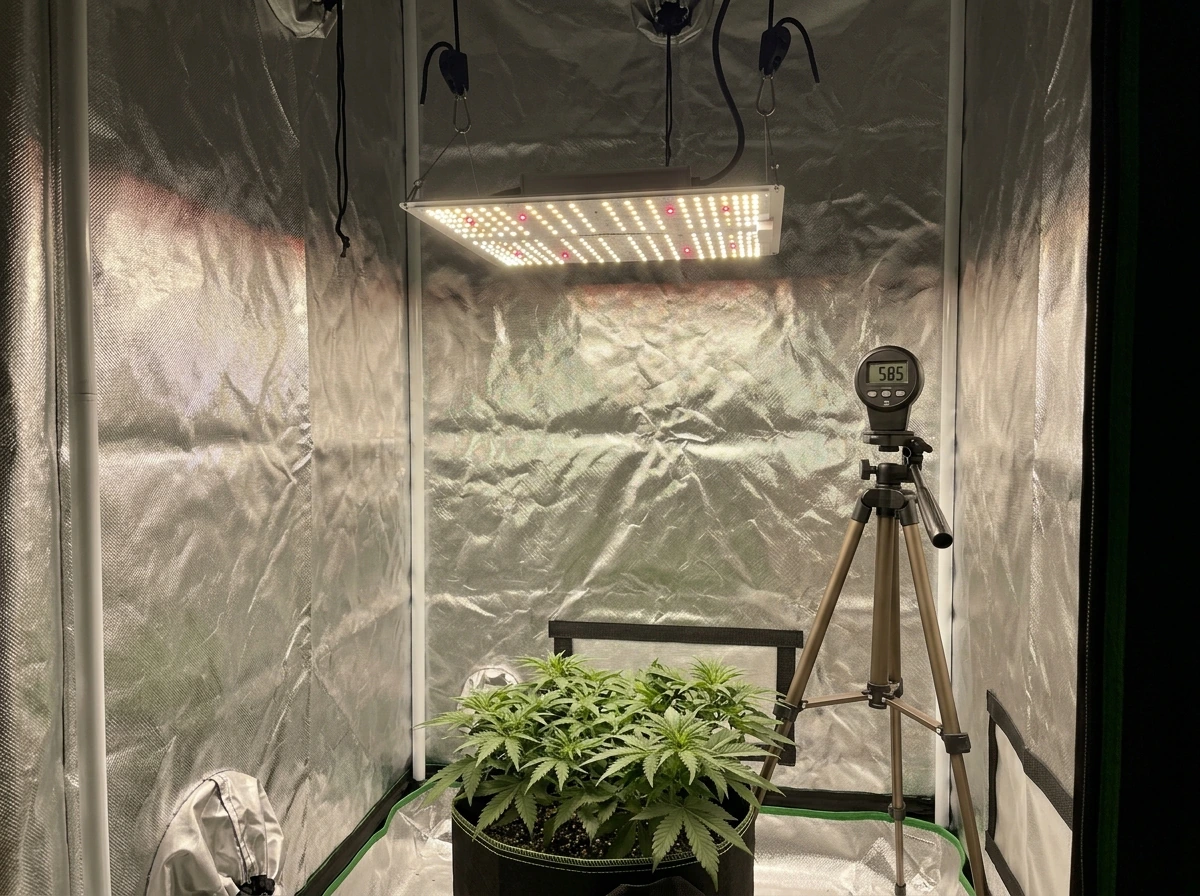
A 2x2 needs roughly 100 to 200 actual watts to hit flowering PPFD targets in the 600 to 900 μmol/m²/s range. The HLG 100 V2 Rspec was the benchmark pick here: around 95W actual draw, published PPFD reports available, and passive cooling with no fan noise. For growers on a tighter budget, the Spider Farmer SF-1000 at roughly 100W actual draw was consistently well-reviewed for its coverage uniformity using Samsung LM301B diodes. Neither light overdrives the diodes, which translates directly to longer lifespan.
3x3 tents (9 square feet)
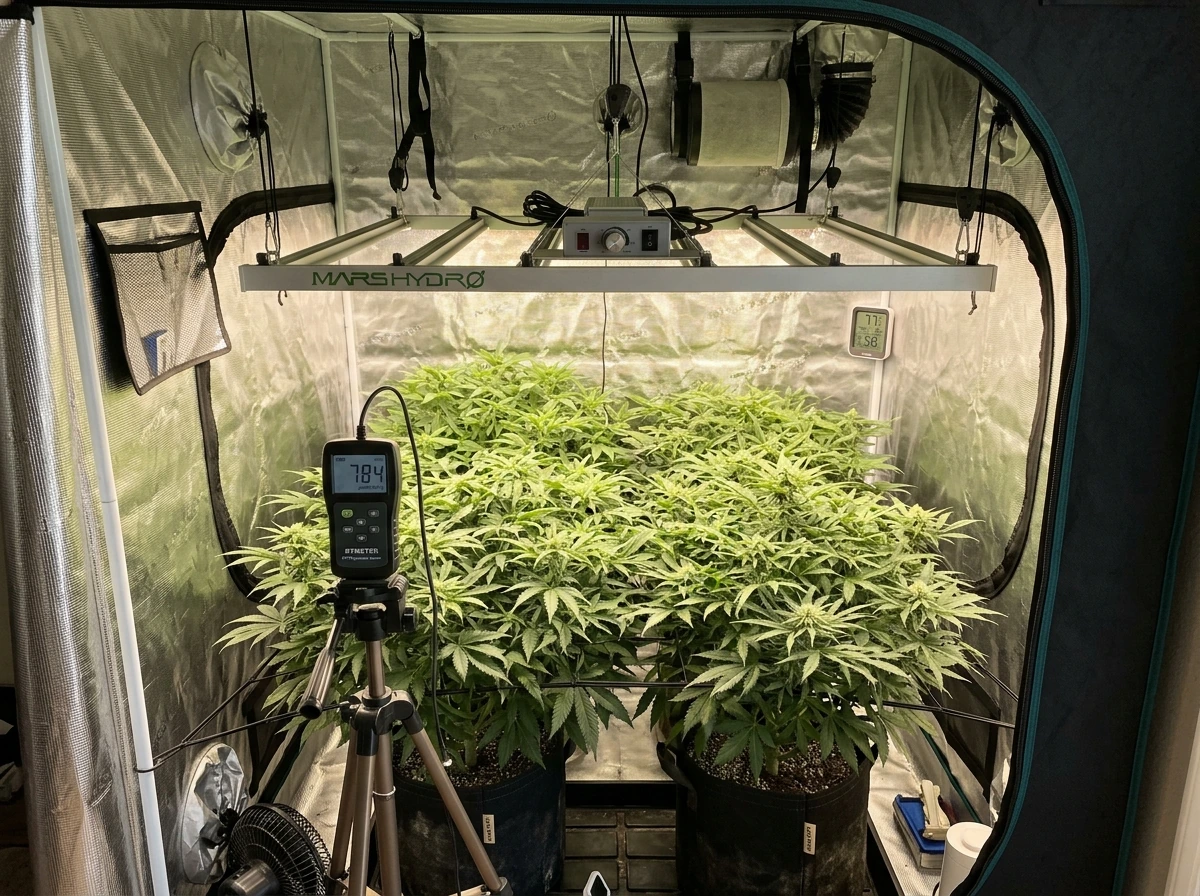
A 3x3 is where the mid-range bar-style and quantum board lights really earned their reputations. The Mars Hydro FC-3000 was independently tested in a 3x3 PAR test area and returned an average PPFD of 753.9 μmol/m²/s, which is solid for full-cycle growing and excellent for the price point. The HLG 300 V2 Rspec was the premium alternative, with tighter uniformity across the 3x3 canopy and a Meanwell HLG driver. The FC-3000's bar layout gave it an edge in reducing hotspots at center versus the more concentrated output of a single-board design.
4x4 tents (16 square feet)
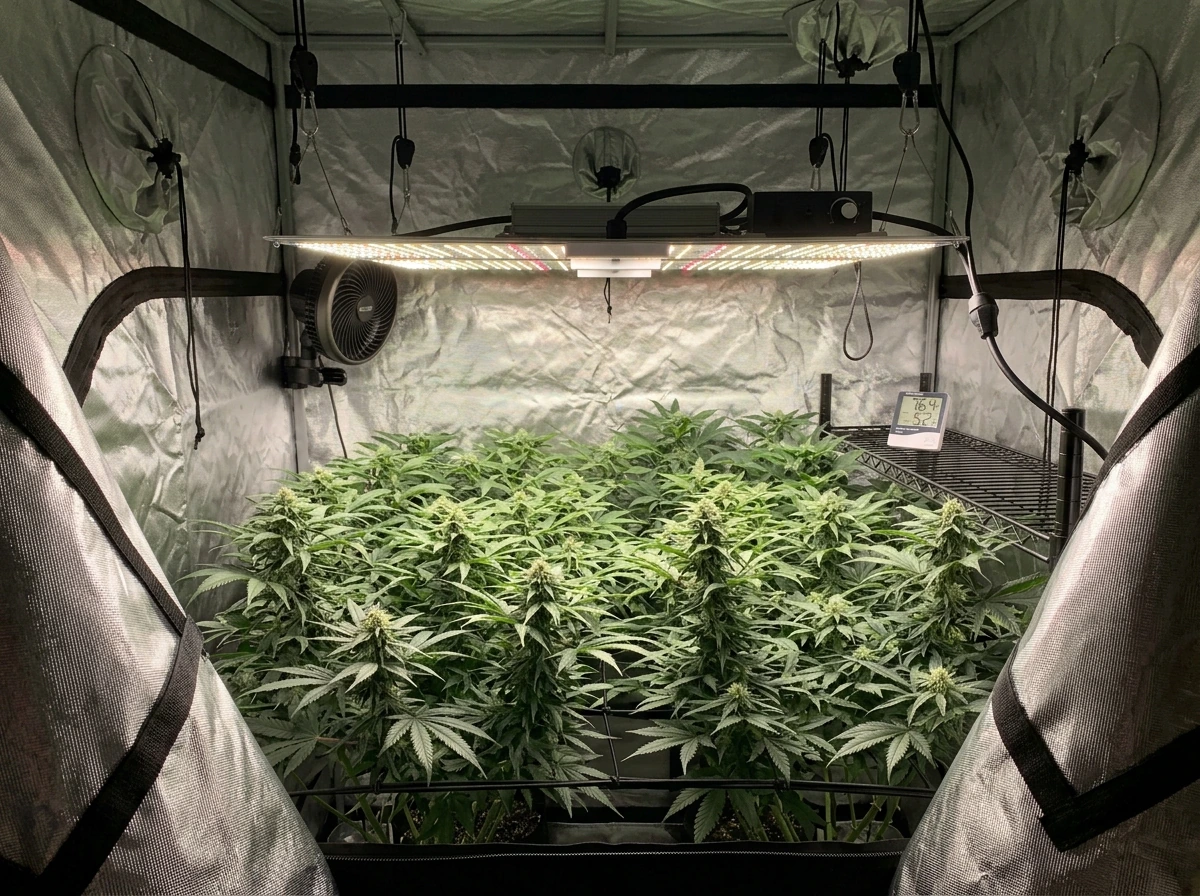
The 4x4 is the most common hobbyist footprint and the most competitive product category. You need 400 to 600 actual watts to properly flower a 4x4, and you want PPFD uniformity because corners matter here. The HLG 600 Rspec was a top-tier pick with independently published PPFD data measured at 24 inches on a 6-inch grid at 25°C ambient, which is the kind of testing transparency that builds trust. The Spider Farmer SF-4000 at around 450W actual draw and the Mars Hydro FC-4800 both competed in this space at lower price points, with bar configurations helping uniformity. If you ran a 4x4 in 2022 and wanted maximum yield with verifiable data, the HLG 600 Rspec was the reference standard.
5x5 and larger spaces
Once you go beyond a 4x4, a single fixture starts showing its limits in corner coverage. The better approach at 5x5 and up is either a large bar-style fixture designed for that footprint or two overlapping lights. The HLG 650R covered a 5x5 with strong results. For commercial-scale operations or multi-light configurations, Fluence's SPYDR 2i (claiming peak output of 1700 μmol/s and efficacy of 2.7 μmol/J) was among the most efficient fixtures available in 2022, though at a price point that only pencils out for production growers. For anyone scaling past a single tent, bar arrays and vertical uniformity become the conversation, and that is a topic covered in more depth in the best bar LED grow lights guide on this site.
Matching the right light to your grow stage and use case
Seedlings and clones
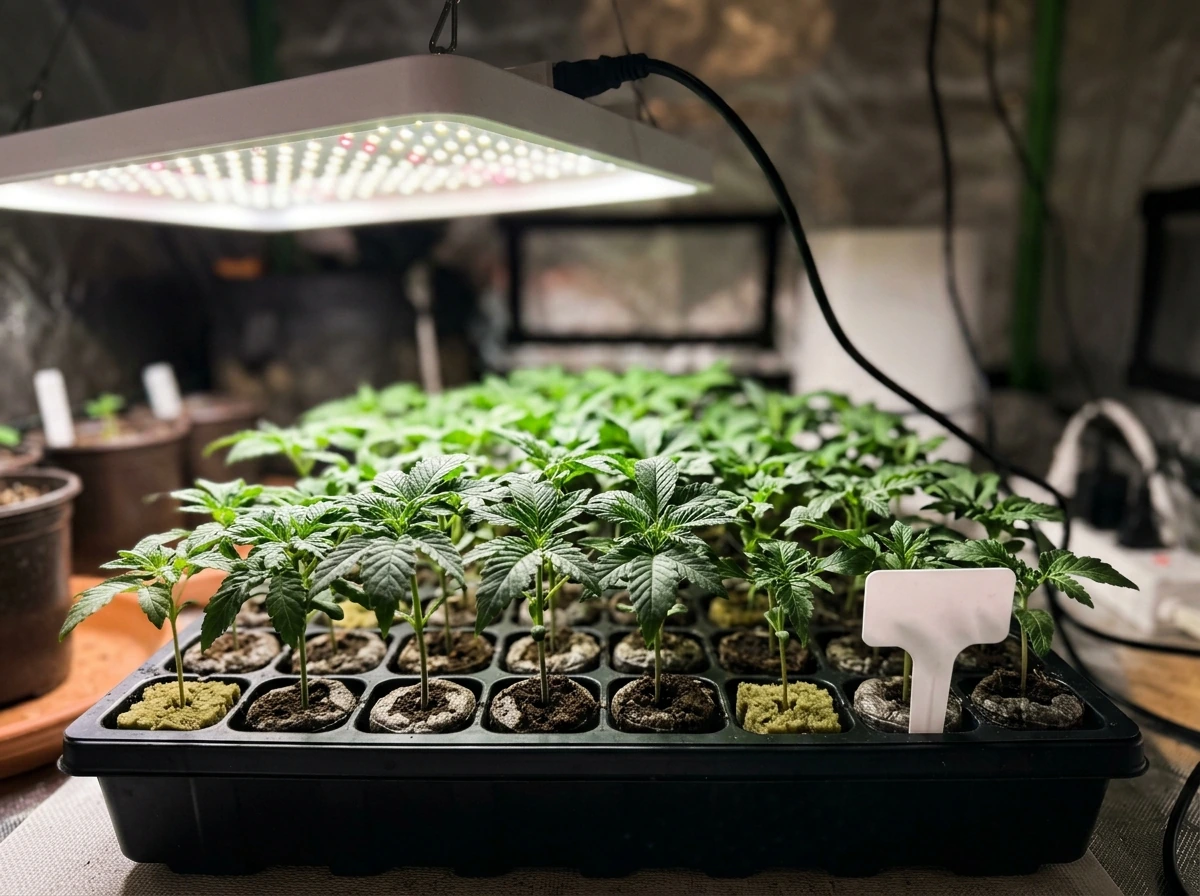
Seedlings and clones are the most commonly over-lit plants in any home grow. Target PPFD for this stage is under 200 μmol/m²/s, with some extension resources citing under 100 for the earliest seedling phase. Running a full-power 600W fixture over a seedling tray at 18 inches will cook them. The right approach is either a dedicated low-wattage propagation light, or a full-cycle light with a dimmer that lets you drop to 20 to 30 percent output. This is one reason the dimming spec matters so much: a Meanwell HLG driver with 0 to 10V dimming gives you that flexibility without buying a separate fixture.
Vegetative growth
Veg wants PPFD in the 400 to 600 μmol/m²/s range for most crops, with a daily light integral (DLI, the total photons delivered per day per square meter) of around 20 to 30 mol/m²/d being a reasonable target for robust canopy development. Full-spectrum white LEDs (those using phosphor-converted white chips like Samsung LM301B or LM301H) shine here because the broader green and yellow spectrum improves leaf-level light distribution versus tight R/B-heavy boards. Lights like the HLG series and Spider Farmer SF lineup were well-suited to veg given their white-dominant spectrum.
Flowering and bloom
Bloom needs more intensity: 600 to 900 μmol/m²/s at canopy is the practical range for most fruiting and flowering crops, with some strains benefiting from pushing toward 1000 to 1200 if CO2 enrichment is used. The Rspec fixtures from HLG added a deep-red (660nm) and far-red (730nm) component on top of the white board, which supports flowering initiation and Emerson effect responses. This hybrid approach (white phosphor plus targeted reds) outperformed pure blurple R/B panels for flowering weight and quality by a meaningful margin in almost every independent test from that period.
Full-cycle and tent growing
Most home tent growers want one light that handles seed to harvest. The 2022 full-cycle standouts were the fixtures with wide-spectrum output, good dimming range, and enough efficiency to run a full photoperiod without turning the tent into a sauna. The Mars Hydro FC series and HLG quantum boards with dimmers handled this well. For a 4x4 full-cycle setup, expect to run about 400 to 500W actual draw during flowering and dial back to 50 to 60 percent during early veg, this kind of outcome is why top shelf led grow lights are judged by real canopy performance, not marketing claims. best bar led grow lights. top led grow lights 2021
Commercial scaling
Commercial growers care about a different set of numbers: efficacy above everything, fixtures-per-square-foot uniformity, and total system cost including electricity over a 3 to 5 year horizon. In 2022, the Fluence SPYDR series and comparable commercial fixtures from Gavita and Philips Horti were designed for this. The Fluence SPYDR 2i's 2.7 μmol/J efficacy claim is notable because at commercial scale, that difference in efficiency compounds across thousands of fixture-hours. For commercial growers, investing in fixtures with full photometric reports from third-party labs is not optional, it is the only sensible procurement approach.
How to read performance data and spot bad claims
PPFD drops dramatically with distance from the fixture. Some guides report that moving a light further from the canopy can reduce PPFD at the surface by as much as 58 percent. This is why the distance at which a PPFD measurement is taken is not optional information, it is the most important context for any number a brand publishes. A PPFD of 1500 μmol/m²/s measured at 6 inches is meaningless for a canopy at 24 inches. Always check the measurement height.
The gold standard for PPFD reporting is a grid map measured at a realistic canopy distance (18 to 24 inches for most fixtures), taken with a calibrated full-spectrum quantum sensor like the Apogee MQ-500, which has a stated calibration uncertainty of ±5% and a range of 0 to 4000 μmol/m²/s. HLG published exactly this kind of report for the HLG 600 Rspec, including grid spacing (6 inch squares), ambient temperature (25°C), and height (24 inches and 30 inches). That is what credible data looks like. When a brand provides a single peak number with no grid, no distance specification, and no sensor reference, treat it with heavy skepticism.
Uniformity matters as much as average PPFD. A light that hits 1000 μmol/m²/s in the center and 300 in the corners is not a light that grows a uniform 4x4 canopy. Look for the ratio between minimum and maximum readings across the coverage map: a tight ratio (say, 700 minimum versus 900 maximum across a 4x4) is a genuinely well-designed fixture. A wide ratio means the stated coverage area is being stretched.
One important measurement note: for any PPFD reading to be valid on a horizontal canopy surface, the sensor must be perfectly level. Apogee explicitly flags this in their quantum sensor documentation. If you are testing lights yourself, a tilted sensor will consistently under-read one side and over-read the other.
Installation, hang height, and avoiding coverage mistakes
Hang height is the single most adjustable variable in your grow setup, and it is also where most growers make avoidable mistakes. Here is the practical breakdown.
- Start at the manufacturer's recommended height for your target PPFD, typically 18 to 24 inches above canopy for flowering, 24 to 30 inches for veg.
- Use a PPFD meter or a validated app reading to confirm intensity at canopy level before plants go in. Do not trust the fixture spec sheet alone.
- If you see hot spots at center (reading 200+ μmol/m²/s above target) raise the light. If corners are more than 30 to 40 percent below center, lower the light or add a second fixture for that zone.
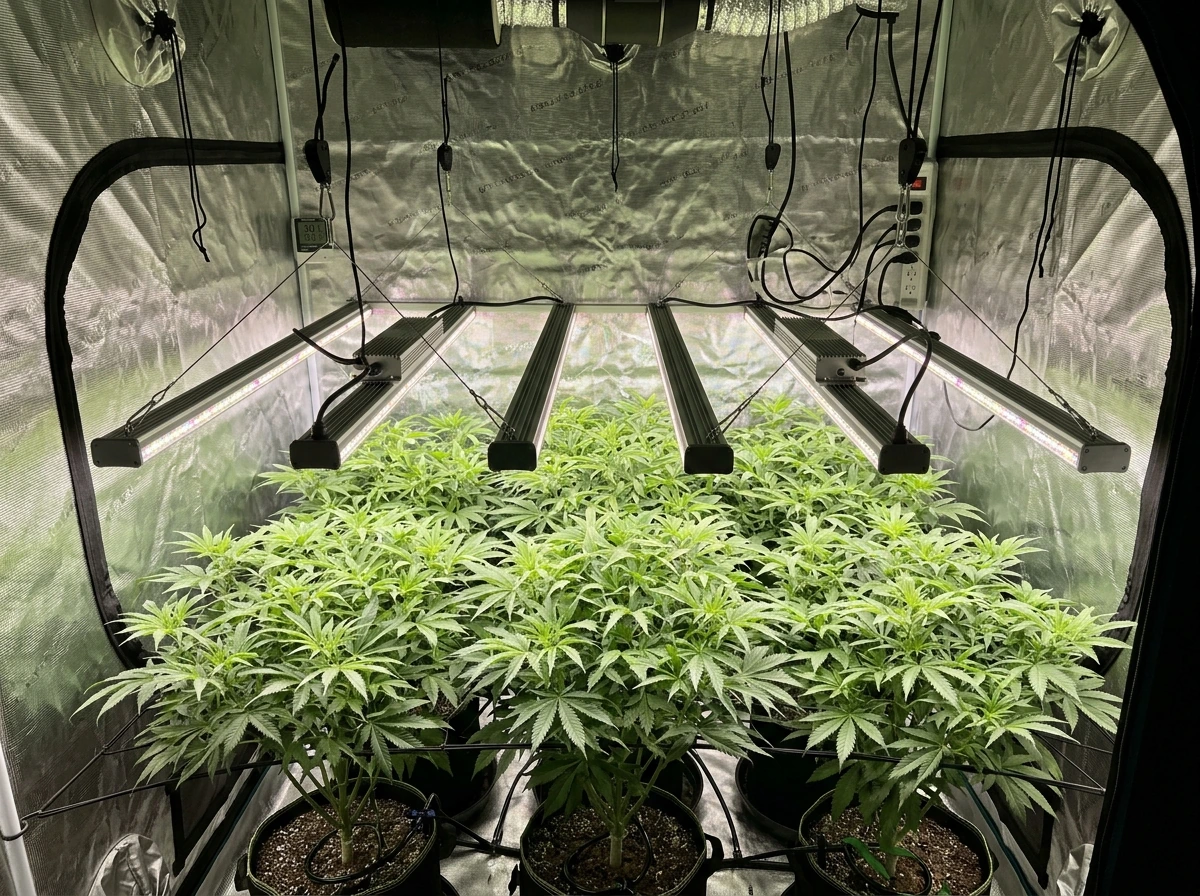
- For bar-style lights, the longer bar spread naturally smooths out center hot spots versus single-board designs. If you are fitting a bar light to a square tent, orient the bars parallel to the short dimension for the most even spread.
- Dial intensity down during seedling and early veg stages using the dimmer, then raise to full power as plants approach flowering. This also saves energy during the lower-intensity growth phases.
- For multi-light setups, overlap coverage zones slightly (around 6 to 12 inches of overlap between adjacent fixtures) to avoid dark alleys between lights.
- Leave at least 12 inches of clearance above the light to the tent ceiling for heat dissipation, even on passively cooled models.
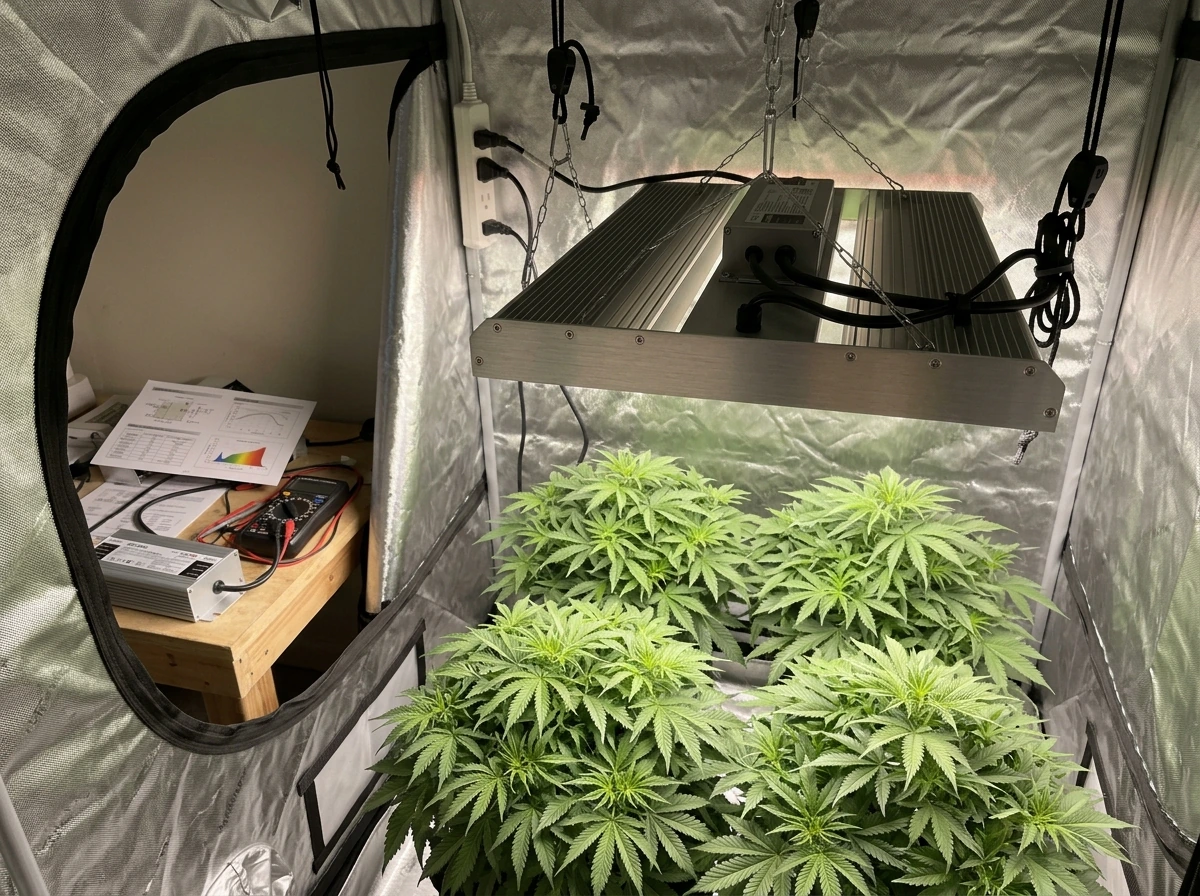
Heat management is part of installation planning, not an afterthought. Passively cooled lights like the HLG series generate heat that needs to move somewhere. In a sealed tent without good air exchange, even an efficient light will raise ambient temperature. If your tent runs above 80°F (27°C) at canopy, you will see the PPFD-to-yield relationship start to break down. Inline fans and proper exhaust routing are not optional accessories.
Budget vs premium: where the money actually makes a difference
The honest answer is that the gap between budget and premium closed significantly by 2022. Mid-range lights from Mars Hydro, Spider Farmer, and similar brands were using the same Samsung LM301B diodes as HLG, often paired with Meanwell drivers. The difference showed up in three places: driver binning and quality control, heatsink build quality, and post-sale support.
| Tier | Example brands (2022) | Typical efficacy | Driver quality | Expected lifespan | Best for |
|---|---|---|---|---|---|
| Budget ($100–$250) | Viparspectra, Bestva | 1.5–1.9 μmol/J | Generic or unbranded | 20,000–30,000 hrs | First-time growers, low-stakes setups |
| Mid-range ($250–$500) | Mars Hydro FC, Spider Farmer SF | 2.0–2.4 μmol/J | Meanwell or equivalent | 40,000–50,000 hrs | Serious hobbyists, 3x3 to 4x4 tents |
| Premium ($500–$1000+) | HLG, Gavita, Fluence | 2.4–2.9 μmol/J | Meanwell HLG series | 50,000+ hrs | Experienced growers, commercial scaling |
The cost-per-effective-output calculation is where premium fixtures earn their price over time. A fixture drawing 600W at 2.7 μmol/J is delivering 1620 μmol/s. A budget fixture drawing the same 600W at 1.7 μmol/J delivers 1020 μmol/s. That is 37 percent more usable light from the same electricity bill, compounded across every hour of every grow cycle. For hobbyists running one tent part-time, the budget option may be financially rational. For anyone running lights 18 hours a day, 365 days a year, the efficiency delta pays for itself in electricity savings within one to two years.
Heat and noise are secondary cost factors that rarely show up in comparisons. A less efficient fixture converts more of its wattage to heat, which increases your cooling load. If you are running an inline fan and AC to compensate for a hot budget light, you are paying the efficiency penalty twice. Passively cooled premium boards (no fan) also eliminate a mechanical failure point entirely.
Reliability is harder to quantify but worth taking seriously. Driver failures are the most common cause of early LED fixture death, and a Meanwell HLG-series driver is simply more robust than a generic switching supply. For a commercial operation or any grower who cannot afford mid-cycle downtime, paying for a known driver brand is insurance, not a luxury. For a hobbyist growing one cycle a year in a 2x2, a good mid-range fixture is genuinely sufficient.
How to use this guide right now, in 2026
The specific model numbers from 2022 have been updated, revised, or succeeded by newer versions in most cases. The HLG 600 Rspec has follow-on versions. Mars Hydro and Spider Farmer have released updated FC and SE series. But the evaluation method is identical: look for published grid-based PPFD reports at realistic distances, actual draw numbers, verified efficacy in μmol/J, and driver quality. Any current light that passes those tests the way the 2022 standouts did is worth considering. Any light that does not publish that data is not, regardless of how attractive the spec sheet looks.
If you are building or upgrading a setup today, use the specs checklist in this guide as your filter, size your fixture to your actual flowering footprint (not the maximum listed coverage area), verify PPFD at your intended canopy height with a real measurement or an independent test, and budget for the full system cost including electricity over at least two years. The lights that earned their reputation in 2022 did so because they were transparent about their numbers. Hold every light you consider to that same standard.
FAQ
Is “top led grow lights 2022” still a good search term if I’m buying in 2026 or later?
Yes for narrowing styles (white phosphor boards, bar fixtures, dimmable drivers), but you should also confirm the exact current model revision. Many “2022 standouts” were updated, so verify that today’s version still publishes grid PPFD at a stated height and uses the same driver family.
What should I do if a brand lists PPFD but does not mention the sensor model or measurement height?
Skip the product. Without sensor type and height, you cannot compare results because PPFD changes sharply with distance and sensor response. If they only provide a center-point number, ask for the full grid map or a test report measured at your intended canopy distance.
How do I translate PPFD targets into how many lights or what fixture size for my tent?
Use your flowering footprint, then plan for uniformity, not just average PPFD. A common mistake is buying for the maximum stated coverage area, then discovering corners come up short. Start from the flowering target range, then confirm the minimum PPFD in the grid map meets your threshold across the corners.
If I will run a dimmer, can I rely on the vendor’s “max output” efficacy and PPFD numbers?
Not automatically. Dimming can change driver efficiency and slightly alter spectrum distribution, so ask whether dimming was included in any published PPFD maps. If not, treat full-power PPFD as an upper bound and plan to measure or estimate conservatively when you run at 20 to 60%.
Do I need a dimmable driver if I’m only growing seedlings and veg?
Often yes, because propagation and early veg usually require much lower PPFD to prevent stress and stretching. If you cannot lower output to roughly 20 to 30% of flowering intensity, you may need a dedicated lower-wattage propagation light instead.
Is it better to buy one larger fixture for a 5x5, or two fixtures overlapping?
It depends on uniformity tolerance and your hang height control. Two fixtures overlapping can improve corner coverage, but only if the footprint maps show acceptable minimum PPFD at your canopy height. If you buy one fixture, prioritize “5x5 tuned” bar geometry with grid data, not a generic maximum coverage claim.
How much does sensor placement and leveling actually affect PPFD readings?
Enough to mislead you. A tilted sensor can under-read one side and over-read the other, which makes uniformity look worse (or better) than reality. If you measure yourself, use a bubble level on the sensor and keep the same measurement height for every grid point.
What airflow strategy should I use with passively cooled lights in a tent?
Treat exhaust as part of light performance, not an accessory. Aim to keep canopy temperature stable (many growers target staying under about 27°C), because high temperatures can reduce LED output and increase driver stress. Place intake low and exhaust high, and make sure the hot air can actually exit the tent, not recirculate inside.
Can I save money by buying a higher-watt “budget” light and raising it less instead of paying for efficiency?
It usually backfires. Lower efficacy means more of your wattage becomes heat, raising cooling needs and reducing usable photon output. Also, PPFD falls with distance, so “raising it less” is limited by plant height changes and heat constraints.
What’s a practical way to evaluate uniformity when the brand provides a grid map?
Look at the ratio of the minimum to maximum PPFD readings in the stated footprint at your height. A tighter range (small spread) usually indicates fewer hot spots and better corner performance. If they only show a color map with no numbers, request the minimum and maximum values or the raw grid data.
How do I check if a light’s spectrum is appropriate for my stage?
Match the fixture type to the stage goal. For veg, white phosphor boards are often convenient because they support broader leaf-level distribution, while flowering commonly benefits from additional deep and far-red components. If the brand does not list the spectrum approach (white type and any targeted reds), treat the “full cycle” claim as unverified.
What driver or brand details should I look for to reduce reliability risk?
Prioritize fixtures that specify the driver manufacturer (for example, Meanwell HLG-series) and provide clear warranty terms. Driver failures are a common early failure mode, and in practice a known driver platform is less risky than an unnamed generic supply, especially for growers running long photoperiods.
If I can’t measure PPFD myself, how should I compare two lights fairly?
Compare only lights with grid-based PPFD reports at a stated canopy distance and sensor basis. Then compare actual draw and efficacy in μmol/J, not marketing wattage. If one light lacks grid maps or measurement context, it is not comparable on a performance basis.
Next Articles
Top LED Grow Lights: How to Choose Best Models for Your Setup
Choose top LED grow lights with PAR, coverage, spectrum, watts, heat, dimming and warranty, plus best model picks by set
Best Bar LED Grow Lights: Buying Guide by Tent Size and PPFD
Pick the best bar LED grow lights by tent size and PPFD, with practical specs, sizing, and installation tips.
Best American Made LED Grow Lights: USA Selection Guide
USA-made LED grow lights guide with how to verify claims, compare PPF and coverage, and pick best options for your space